Specialist care, anywhere.

Live clinical oversight. Documented encounters that close the loop between the field and the care team.

medCLOUD brings the physician into every corner of the state — in real time.

Distressed patient transported in ambulance

In rural America, the nearest specialist is often an hour or more away.

For a stroke patient, that hour is everything.

Rural healthcare has a distance problem. But distance is really a time problem. And time, in acute care, is a survival problem. The Rural Health Transformation program exists because Congress recognized what rural clinicians have known for decades: geography should not determine the quality of care a patient receives.

medCLOUD is the technology that closes that gap — connecting rural patients to specialist-level care in real time, regardless of where either party is located.

  • Stroke and Cardiac Emergency:

  • Rural Emergency Department
    Specialist Access:

  • Rural Primary Care and
    Chronic Disease Management:

  • Rural Paramedicine and EMS:

  • Tribal and Frontier Health Communities:

The problem: The treatment window for stroke is 3-4.5 hours from symptom onset for tPA administration. The nearest stroke center from many rural hospitals is 45-90 minutes away. By the time a patient is transported, assessed, and treated, the window has closed. Rural stroke patients die or suffer permanent disability at rates that urban patients do not — not because the medicine is different, but because the physician isn’t there.

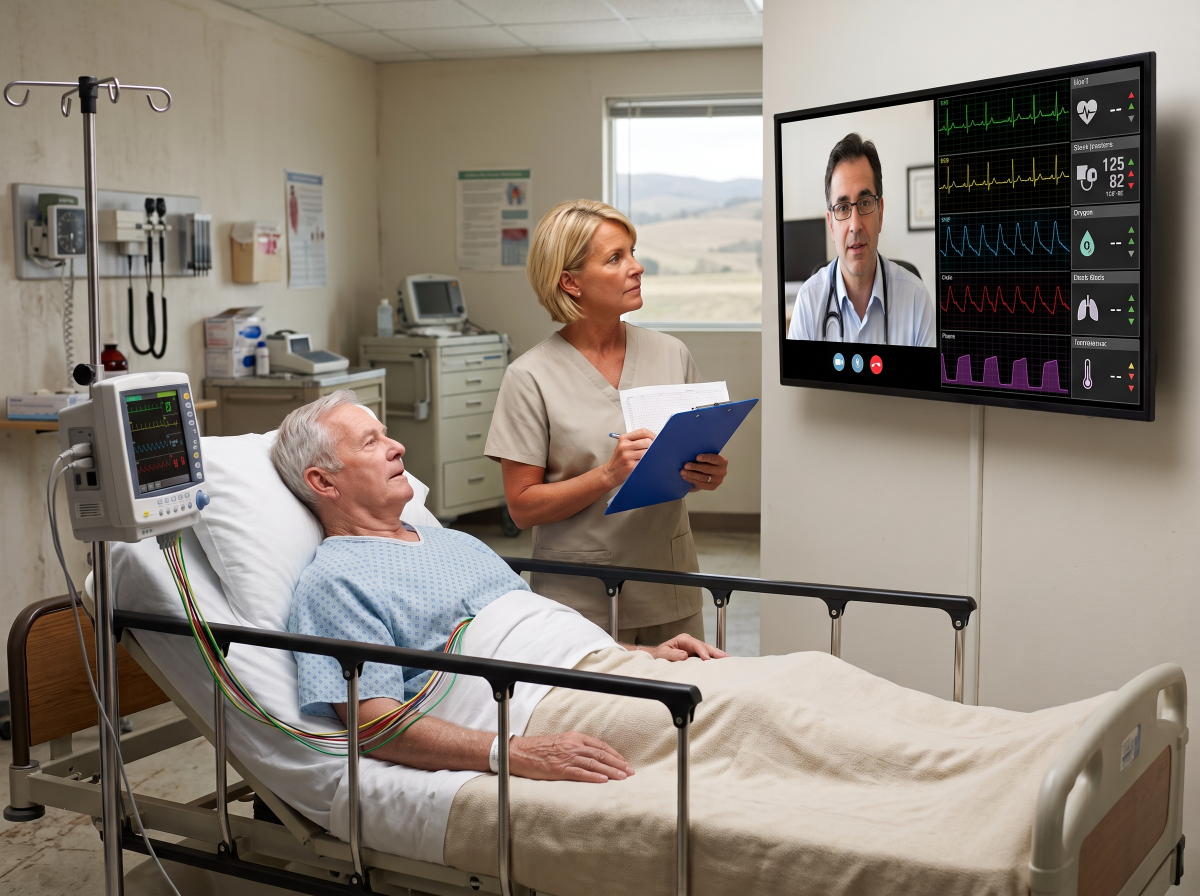
How medCLOUD changes this: The rural ED physician opens medCLOUD and connects to a neurologist at the stroke center. The neurologist sees the patient via high-resolution video, reviews the CT results, and assesses live neurological function. tPA is administered at the rural hospital under remote specialist supervision — within the treatment window. The patient does not need to be transported to receive specialist-level stroke care.

The problem: A rural critical access hospital ED sees a pediatric trauma patient, a cardiac arrhythmia, and a psychiatric crisis in the same shift. The ED physician is a generalist. There is no pediatric surgeon, no cardiologist, no psychiatrist. The standard response is stabilize and transport — adding risk, cost, and time to every case that falls outside generalist scope.

How medCLOUD changes this: The rural ED physician connects to the appropriate specialist in real time — pediatric surgery, cardiology, psychiatry — who assesses the patient via live video and biometric streaming and directs management. Many cases that previously required transport can be managed safely in place under remote specialist supervision. The rural hospital becomes a specialist-enabled facility without hiring specialists.

The problem: A rural primary care clinic manages patients with diabetes, hypertension, heart failure, and COPD who cannot afford to travel hours to a specialist for quarterly follow-up. Conditions go unmanaged. Complications develop. Eventually the patient presents to the ED in crisis.

How medCLOUD changes this: The primary care clinic uses medCLOUD to conduct specialist teleconsultations from within the clinic visit. The endocrinologist, cardiologist, or pulmonologist reviews the patient’s live biometrics alongside the primary care physician, adjusts the care plan, and documents the encounter. The patient receives specialist-level management at their local clinic. Complications are prevented, not treated.

The problem: In rural communities, EMS response times are long and the nearest hospital may be 30-60 minutes away. A paramedic managing a complex cardiac patient or a multi-trauma case in the field has limited resources and no real-time physician support. Treat-in-place decisions carry risk without specialist input.

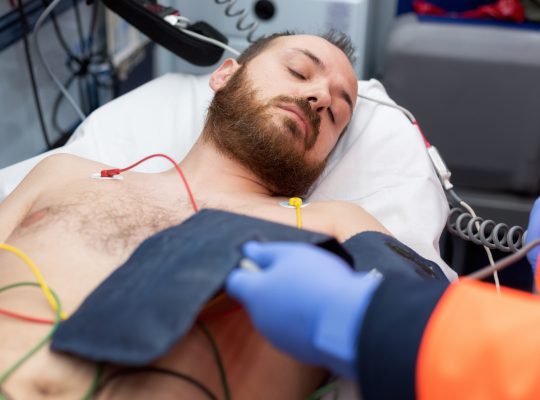
How medCLOUD changes this: The paramedic opens medCLOUD en route or on scene. The supervising physician sees live ECG waveforms, vital signs, and video of the patient in real time. The physician directs advanced interventions, authorizes medication administration, and makes the transport decision with the same clinical information they would have at the bedside. The patient receives physician-supervised care from the moment the ambulance arrives — not when it delivers.

The problem: Tribal health clinics and frontier communities — those with fewer than 6 people per square mile — represent some of the most underserved healthcare environments in the country. Distance is compounded by infrastructure limitations, weather, road conditions, and historical underinvestment.

How medCLOUD changes this: medCLOUD operates on satellite connectivity where cellular infrastructure does not exist. A tribal health clinic can connect to a specialist at a regional medical center using the same platform as an urban health system. The technology does not require fiber. It does not require an IT department. It requires a device, a connection, and clinical intent.

  • Stroke and Cardiac Emergency:

  • The problem: The treatment window for stroke is 3-4.5 hours from symptom onset for tPA administration. The nearest stroke center from many rural hospitals is 45-90 minutes away. By the time a patient is transported, assessed, and treated, the window has closed. Rural stroke patients die or suffer permanent disability at rates that urban patients do not — not because the medicine is different, but because the physician isn’t there.

    How medCLOUD changes this: The rural ED physician opens medCLOUD and connects to a neurologist at the stroke center. The neurologist sees the patient via high-resolution video, reviews the CT results, and assesses live neurological function. tPA is administered at the rural hospital under remote specialist supervision — within the treatment window. The patient does not need to be transported to receive specialist-level stroke care.

  • Rural Emergency Department
    Specialist Access:

  • The problem: A rural critical access hospital ED sees a pediatric trauma patient, a cardiac arrhythmia, and a psychiatric crisis in the same shift. The ED physician is a generalist. There is no pediatric surgeon, no cardiologist, no psychiatrist. The standard response is stabilize and transport — adding risk, cost, and time to every case that falls outside generalist scope.

    How medCLOUD changes this: The rural ED physician connects to the appropriate specialist in real time — pediatric surgery, cardiology, psychiatry — who assesses the patient via live video and biometric streaming and directs management. Many cases that previously required transport can be managed safely in place under remote specialist supervision. The rural hospital becomes a specialist-enabled facility without hiring specialists.

  • Rural Primary Care and
    Chronic Disease Management:

  • The problem: A rural primary care clinic manages patients with diabetes, hypertension, heart failure, and COPD who cannot afford to travel hours to a specialist for quarterly follow-up. Conditions go unmanaged. Complications develop. Eventually the patient presents to the ED in crisis.

    How medCLOUD changes this: The primary care clinic uses medCLOUD to conduct specialist teleconsultations from within the clinic visit. The endocrinologist, cardiologist, or pulmonologist reviews the patient’s live biometrics alongside the primary care physician, adjusts the care plan, and documents the encounter. The patient receives specialist-level management at their local clinic. Complications are prevented, not treated.

  • Rural Paramedicine and EMS:

  • The problem: In rural communities, EMS response times are long and the nearest hospital may be 30-60 minutes away. A paramedic managing a complex cardiac patient or a multi-trauma case in the field has limited resources and no real-time physician support. Treat-in-place decisions carry risk without specialist input.

    How medCLOUD changes this: The paramedic opens medCLOUD en route or on scene. The supervising physician sees live ECG waveforms, vital signs, and video of the patient in real time. The physician directs advanced interventions, authorizes medication administration, and makes the transport decision with the same clinical information they would have at the bedside. The patient receives physician-supervised care from the moment the ambulance arrives — not when it delivers.

  • Tribal and Frontier Health Communities:

  • The problem: Tribal health clinics and frontier communities — those with fewer than 6 people per square mile — represent some of the most underserved healthcare environments in the country. Distance is compounded by infrastructure limitations, weather, road conditions, and historical underinvestment.

    How medCLOUD changes this: medCLOUD operates on satellite connectivity where cellular infrastructure does not exist. A tribal health clinic can connect to a specialist at a regional medical center using the same platform as an urban health system. The technology does not require fiber. It does not require an IT department. It requires a device, a connection, and clinical intent.

  • 01 For Rural Hospital Administrators and CEOs:

  • 02 For Rural Clinicians:

  • 03 For State Health Departments and RHT Program Administrators

Rural Health Transformation funding exists. medCLOUD helps you maximize its impact.

The Rural Health Transformation Program allocates $10 billion annually — with $50 billion committed over five years — specifically to help states modernize rural healthcare delivery and expand access to digital health tools and remote care.

Every state has received its first-year award. The mandate is explicit: invest in technologies that bring high-quality, dependable care to communities that do not have reliable access to it today. medCLOUD is that technology.

It is not a research project or a pilot program. It is a clinically validated platform that is deployed and operational. And it is explicitly aligned with what RHT funding is designed to support.

Access RHT grant funding — medCLOUD qualifies as digital health infrastructure under Rural Health Transformation program guidelines. Implementation costs can be funded through your state’s RHT award.

Retain patients and revenue — every patient managed in-house under remote specialist supervision is a patient who does not generate transport costs, does not leave the service area, and generates revenue for your facility rather than an urban medical center.

Recruit and retain rural physicians — a rural ED physician supported by real-time specialist access practices differently than one working in isolation. medCLOUD changes the professional experience of rural medicine.

Extend your capabilities without expanding your payroll — specialist access through medCLOUD does not require hiring a cardiologist. It requires a subscription.
 

Rural Health Transformation funding exists. medCLOUD helps you maximize its impact.

The Rural Health Transformation Program allocates $10 billion annually — with $50 billion committed over five years — specifically to help states modernize rural healthcare delivery and expand access to digital health tools and remote care.

Every state has received its first-year award. The mandate is explicit: invest in technologies that bring high-quality, dependable care to communities that do not have reliable access to it today. medCLOUD is that technology.

It is not a research project or a pilot program. It is a clinically validated platform that is deployed and operational. And it is explicitly aligned with what RHT funding is designed to support.

The moral injury of rural medicine is often this: knowing what a patient needs and being unable to provide it. Not because of clinical knowledge, but because of geography.

medCLOUD changes that equation. The rural physician who opens medCLOUD and connects to a specialist is not transferring care. They are accessing support — a second set of eyes, a specialist opinion, a documented collaborative decision. The care stays local. The expertise is not.


Rural Health Transformation funding exists. medCLOUD helps you maximize its impact.

The Rural Health Transformation Program allocates $10 billion annually — with $50 billion committed over five years — specifically to help states modernize rural healthcare delivery and expand access to digital health tools and remote care.

Every state has received its first-year award. The mandate is explicit: invest in technologies that bring high-quality, dependable care to communities that do not have reliable access to it today. medCLOUD is that technology.

It is not a research project or a pilot program. It is a clinically validated platform that is deployed and operational. And it is explicitly aligned with what RHT funding is designed to support.

Documented outcomes — medCLOUD produces session-level data on consultations, interventions, diagnoses, and patient outcomes. RHT program administrators have evidence of what the investment is producing.

Scalable across the state — a single medCLOUD deployment serves an individual clinic. A state-level RHT initiative using medCLOUD can reach every critical access hospital, rural EMS agency, and tribal health clinic in the state.

Technology that works where people are — medCLOUD operates on satellite connectivity. It does not require the infrastructure investments that have historically made rural digital health initiatives impractical.


  • 01 For Rural Hospital Administrators and CEOs:

  • The Rural Health Transformation Program allocates $10 billion annually — with $50 billion committed over five years — specifically to help states modernize rural healthcare delivery and expand access to digital health tools and remote care.

    Every state has received its first-year award. The mandate is explicit: invest in technologies that bring high-quality, dependable care to communities that do not have reliable access to it today. medCLOUD is that technology.

    It is not a research project or a pilot program. It is a clinically validated platform that is deployed and operational. And it is explicitly aligned with what RHT funding is designed to support.

    Access RHT grant funding — medCLOUD qualifies as digital health infrastructure under Rural Health Transformation program guidelines. Implementation costs can be funded through your state’s RHT award.

    Retain patients and revenue — every patient managed in-house under remote specialist supervision is a patient who does not generate transport costs, does not leave the service area, and generates revenue for your facility rather than an urban medical center.

    Recruit and retain rural physicians — a rural ED physician supported by real-time specialist access practices differently than one working in isolation. medCLOUD changes the professional experience of rural medicine.

    Extend your capabilities without expanding your payroll — specialist access through medCLOUD does not require hiring a cardiologist. It requires a subscription.


  • 02 For Rural Clinicians:

  • The Rural Health Transformation Program allocates $10 billion annually — with $50 billion committed over five years — specifically to help states modernize rural healthcare delivery and expand access to digital health tools and remote care.

    Every state has received its first-year award. The mandate is explicit: invest in technologies that bring high-quality, dependable care to communities that do not have reliable access to it today. medCLOUD is that technology.

    It is not a research project or a pilot program. It is a clinically validated platform that is deployed and operational. And it is explicitly aligned with what RHT funding is designed to support.

    The moral injury of rural medicine is often this: knowing what a patient needs and being unable to provide it. Not because of clinical knowledge, but because of geography.

    medCLOUD changes that equation. The rural physician who opens medCLOUD and connects to a specialist is not transferring care. They are accessing support — a second set of eyes, a specialist opinion, a documented collaborative decision. The care stays local. The expertise is not.


  • 03 For State Health Departments and RHT Program Administrators

  • The Rural Health Transformation Program allocates $10 billion annually — with $50 billion committed over five years — specifically to help states modernize rural healthcare delivery and expand access to digital health tools and remote care.

    Every state has received its first-year award. The mandate is explicit: invest in technologies that bring high-quality, dependable care to communities that do not have reliable access to it today. medCLOUD is that technology.

    It is not a research project or a pilot program. It is a clinically validated platform that is deployed and operational. And it is explicitly aligned with what RHT funding is designed to support.

    Documented outcomes — medCLOUD produces session-level data on consultations, interventions, diagnoses, and patient outcomes. RHT program administrators have evidence of what the investment is producing.

    Scalable across the state — a single medCLOUD deployment serves an individual clinic. A state-level RHT initiative using medCLOUD can reach every critical access hospital, rural EMS agency, and tribal health clinic in the state.

    Technology that works where people are — medCLOUD operates on satellite connectivity. It does not require the infrastructure investments that have historically made rural digital health initiatives impractical.


    Works where your patients are.
    Works where your clinicians are.
    Works wherever you are.

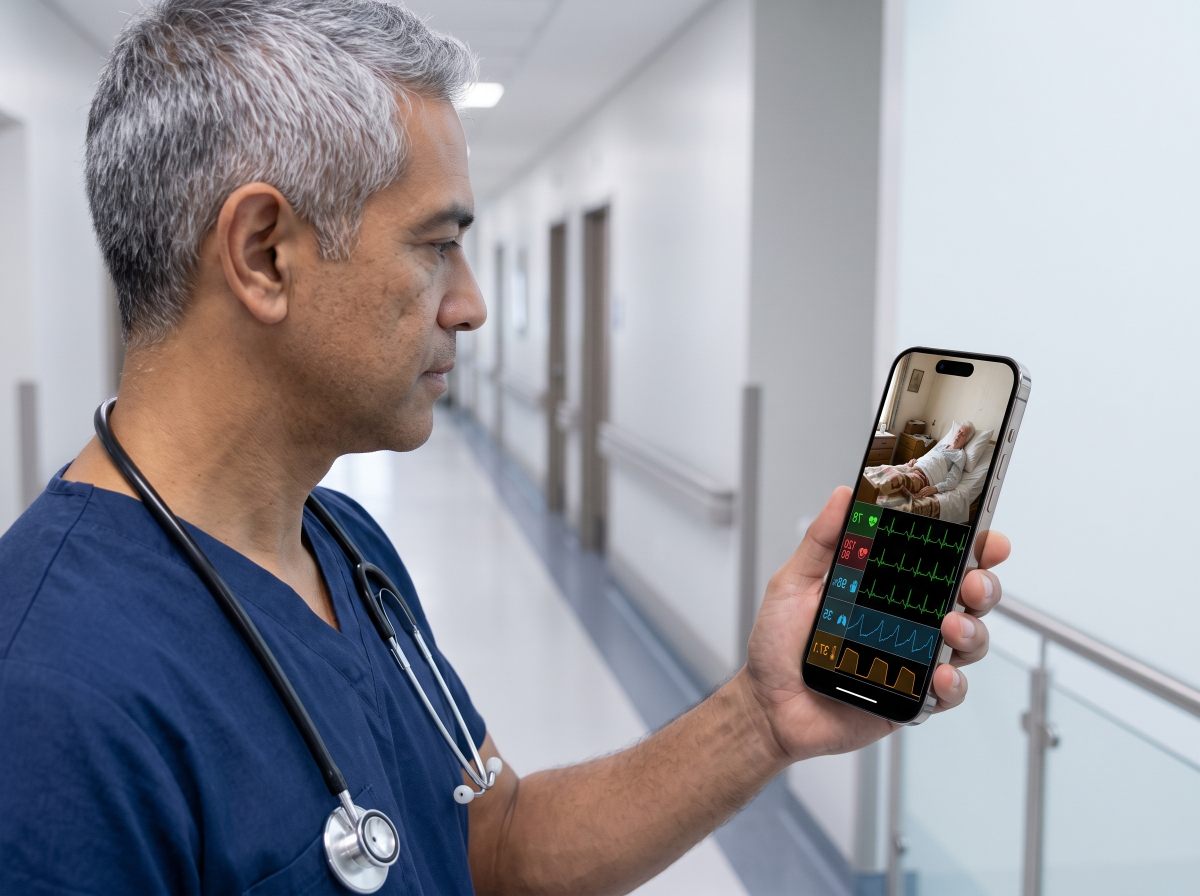
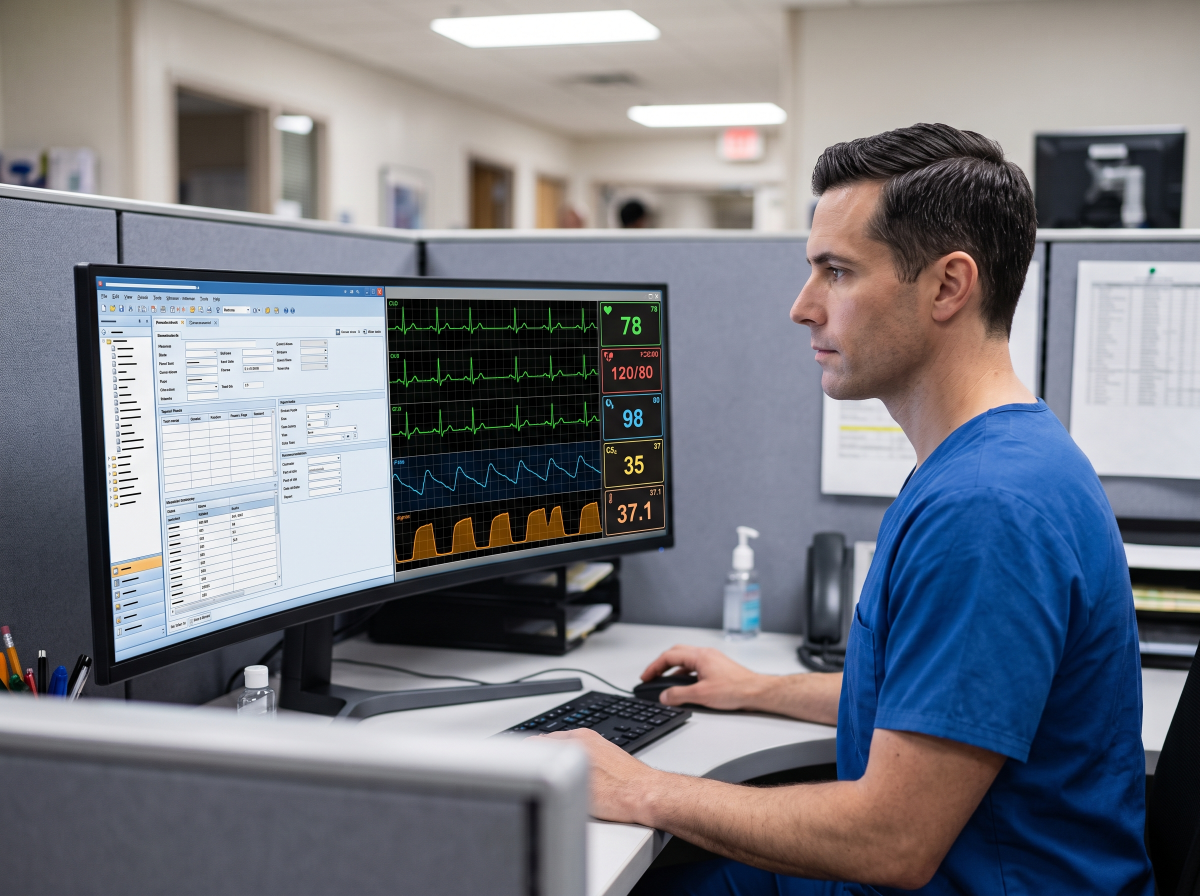
    medCLOUD is a device-agnostic, cloud-based platform that streams synchronized audio, video, and live patient vital signs simultaneously between any two locations — a rural clinic and a regional medical center, a field EMS unit and a supervising physician, a tribal health facility and a specialist anywhere in the country.

    It runs as a Progressive Web Application — no app store, no proprietary hardware, accessible from any modern browser on any device. Setup time is measured in minutes, not months.

    • What it streams, simultaneously:

    • Connectivity:

    • Session recording:

    How medCLOUD works

    12-lead ECG waveforms · Blood pressure (NIBP) · Oxygen saturation (SpO2) · Capnography (EtCO2) · Temperature · Plethysmography · Invasive blood pressure (IBP) · High-resolution video · Bidirectional audio

    medBRIDGE connects any compatible patient monitoring device your clinic, hospital, or EMS agency already uses to the medCLOUD platform. Included with every subscription. No equipment replacement required.

    How medCLOUD works

    Cellular · Office fiber · Mobile satellite. medCLOUD was specifically designed and field-tested with mobility in mind. Urban platform built for rural reality.

    How medCLOUD works

    Every encounter is recorded, timestamped, and stored with full chain of custody. The complete clinical record — every vital sign, every decision, every instruction — is available for review, quality assurance, and documentation.

    • What it streams, simultaneously:

    • How medCLOUD works

      12-lead ECG waveforms · Blood pressure (NIBP) · Oxygen saturation (SpO2) · Capnography (EtCO2) · Temperature · Plethysmography · Invasive blood pressure (IBP) · High-resolution video · Bidirectional audio

      medBRIDGE connects any compatible patient monitoring device your clinic, hospital, or EMS agency already uses to the medCLOUD platform. Included with every subscription. No equipment replacement required.

    • Connectivity:

    • How medCLOUD works

      Cellular · Office fiber · Mobile satellite. medCLOUD was specifically designed and field-tested with mobility in mind. Urban platform built for rural reality.

    • Session recording:

    • How medCLOUD works

      Every encounter is recorded, timestamped, and stored with full chain of custody. The complete clinical record — every vital sign, every decision, every instruction — is available for review, quality assurance, and documentation.

    medCLOUD integrates with the EHR systems rural and critical access hospitals actually use.

    Epic — HL7 FHIR R4 integration

    Cerner, Meditech, and others — HL7 v2 and FHIR-compatible data exchange

    Bidirectional data flow — clinical data captured during the medCLOUD session returns to the EHR of record, eliminating duplicate documentation

    No EHR replacement required — medCLOUD works alongside your existing system

    For rural facilities without a full-featured EHR, medCLOUD’s session documentation provides a standalone clinical record exportable in standard formats.
    • "Does this qualify for Rural Health Transformation funding?"

    • "We are a small rural hospital with limited IT resources. Is this complicated to implement?"

    • "Is the session recorded? What about patient privacy?"

    • "How do we connect with specialists? Do we need to build those relationships ourselves?"

    • "What does this cost, and how does the RHT grant offset it?"

    FREQUENTLY ASKED QUESTIONS

    Yes. The Rural Health Transformation Program explicitly supports technology that improves rural access to care, enables remote monitoring, and connects rural patients to specialist services. medCLOUD is digital health infrastructure — it qualifies. Our team can provide documentation supporting your state’s RHT grant application and works with rural facilities through the funding process. The question is not whether you can use RHT funds for medCLOUD. It is how to structure your application to maximize what you receive.

    FREQUENTLY ASKED QUESTIONS

    medCLOUD is a Progressive Web Application — it runs in a browser. There is no server installation, no complex IT infrastructure, and no proprietary hardware beyond medBRIDGE, which ships pre-configured. Implementation support is included with every subscription. For a rural critical access hospital without a dedicated IT team, this is one of the lowest-friction enterprise healthcare technology deployments available.

    FREQUENTLY ASKED QUESTIONS

    Yes — every medCLOUD session is recorded in a HIPAA-compliant, encrypted environment. Access is restricted to authorized clinical personnel within your organization. Recordings are your clinical and legal protection — a complete, timestamped record of the consultation, the findings, and the clinical decisions made.

    For rural facilities managing complex cases remotely, the recording is not a liability. It is evidence of the standard of care you delivered.

    FREQUENTLY ASKED QUESTIONS

    medCLOUD is the platform — the specialist network is yours to configure. Most rural hospitals already have transfer relationships with regional medical centers and academic health systems. medCLOUD formalizes and scales those relationships: instead of a phone call, the specialist sees the patient. For rural organizations building new specialist relationships, PriusMED can facilitate introductions to partner health systems with teleconsultation programs.

    FREQUENTLY ASKED QUESTIONS

    medCLOUD is a subscription — no large upfront capital expenditure. The subscription includes medBRIDGE hardware, platform access, implementation support, and ongoing technical assistance. Monitoring devices are purchased directly from manufacturers at standard pricing. For most rural facilities, the first-year subscription cost is fully fundable through a single RHT grant allocation. Our team works with facilities to structure the procurement in a way that aligns with grant requirements and timelines.

    • "Does this qualify for Rural Health Transformation funding?"

    • FREQUENTLY ASKED QUESTIONS

      Yes. The Rural Health Transformation Program explicitly supports technology that improves rural access to care, enables remote monitoring, and connects rural patients to specialist services. medCLOUD is digital health infrastructure — it qualifies. Our team can provide documentation supporting your state’s RHT grant application and works with rural facilities through the funding process. The question is not whether you can use RHT funds for medCLOUD. It is how to structure your application to maximize what you receive.

    • "We are a small rural hospital with limited IT resources. Is this complicated to implement?"

    • FREQUENTLY ASKED QUESTIONS

      medCLOUD is a Progressive Web Application — it runs in a browser. There is no server installation, no complex IT infrastructure, and no proprietary hardware beyond medBRIDGE, which ships pre-configured. Implementation support is included with every subscription. For a rural critical access hospital without a dedicated IT team, this is one of the lowest-friction enterprise healthcare technology deployments available.

    • "Is the session recorded? What about patient privacy?"

    • FREQUENTLY ASKED QUESTIONS

      Yes — every medCLOUD session is recorded in a HIPAA-compliant, encrypted environment. Access is restricted to authorized clinical personnel within your organization. Recordings are your clinical and legal protection — a complete, timestamped record of the consultation, the findings, and the clinical decisions made.

      For rural facilities managing complex cases remotely, the recording is not a liability. It is evidence of the standard of care you delivered.

    • "How do we connect with specialists? Do we need to build those relationships ourselves?"

    • FREQUENTLY ASKED QUESTIONS

      medCLOUD is the platform — the specialist network is yours to configure. Most rural hospitals already have transfer relationships with regional medical centers and academic health systems. medCLOUD formalizes and scales those relationships: instead of a phone call, the specialist sees the patient. For rural organizations building new specialist relationships, PriusMED can facilitate introductions to partner health systems with teleconsultation programs.

    • "What does this cost, and how does the RHT grant offset it?"

    • FREQUENTLY ASKED QUESTIONS

      medCLOUD is a subscription — no large upfront capital expenditure. The subscription includes medBRIDGE hardware, platform access, implementation support, and ongoing technical assistance. Monitoring devices are purchased directly from manufacturers at standard pricing. For most rural facilities, the first-year subscription cost is fully fundable through a single RHT grant allocation. Our team works with facilities to structure the procurement in a way that aligns with grant requirements and timelines.

    ORDERING INFORMATION

    Designed for rural healthcare budgets. Fundable through Rural Health Transformation.

    medCLOUD is available on 1-year, 2-year, and 3-year subscription terms.

    Rural Health Transformation grant alignment: Our team can provide supporting documentation for your RHT grant application, including a technology capability statement, HIPAA compliance documentation, and implementation scope of work. We have experience working with rural facilities through the grant funding process.

    Pricing is based on program scope, number of sites, and subscription term. Contact us for a customized quote that accounts for your RHT funding timeline and grant cycle.

    Physician checking patient's vitals on a tablet

    Every subscription includes:

    ✓ Full medCLOUD platform access — unlimited sessions within your licensed program

    ✓ medBRIDGE hardware — pre-configured relay device connecting your existing monitors to the platform

    ✓ Implementation support — setup, integration, and clinical onboarding

    ✓ Technical support throughout the subscription term

    ✓ Software updates included

    What's not included:

    Patient monitoring devices are purchased directly from the device manufacturer.

    PriusMED can facilitate introductions to compatible device vendors but does not act as a distributor.

    This preserves your procurement flexibility and keeps vendor relationships direct.

    Start Your medCLOUD Pilot

    See medCLOUD working in your area before you commit. Our RHT pilot evaluation gives your program full platform access to test medCLOUD with your paramedics, your monitors, and your medical director — before making a subscription commitment.

    Pilot participants receive:
    Full medCLOUD platform access for the evaluation period
    medBRIDGE device for the duration of the pilot
    Onboarding and training for your paramedics and medical director
    A dedicated clinical success contact throughout the evaluation
    Aggregate outcome data from your pilot visits for your program reporting
    Privacy Overview

    This website uses cookies so that we can provide you with the best user experience possible. Cookie information is stored in your browser and performs functions such as recognising you when you return to our website and helping our team to understand which sections of the website you find most interesting and useful.