Your customers demand accurate documentation.

You need the infrastructure to deliver it — without building it yourself.

You need the infrastructure to deliver automated, fast, and accurate documentation - without building it yourself.

The EMS documentation problem is well understood by every ePCR vendor in the market. Providers have been giving the same feedback for years: documentation takes too long, accuracy suffers under stress, run reports are reconstructed from memory at the end of a shift, and the result is incomplete, inconsistent records that create legal exposure, billing denials, and QA/QI gaps.

The solution is automatic capture of structured data augmented with ambient AI documentation — capturing what actually happened on the call and converting it into a NEMSIS-compliant record. Some of your competitors have recognized this and begun building towards it. Every ePCR vendor is now being asked by their customers when they will have this feature implemented.

medCLOUD closes that gap — for any ePCR platform, without requiring you to build anything from scratch.

  • Model A: build yourself

  • Model B: integrate and collaborate

  • Facing competitive pressure on documentation?

  • Already have strong documentation and want to make it richer?

  • Building the Next-Generation Platform?

The problem: Your product team wants to build AI-powered documentation. Your data scientists understand NEMSIS. What you don’t have is the audio capture infrastructure, the vital signs streaming layer, the real-time transcription engine, or the field-hardened hardware to make it work reliably in the back of an ambulance. Building all of that from scratch is a multi-year, multi-million dollar investment — and the competitive window is open now, not in three years.

How OEM Model A works: PriusMED licenses access to the raw medCLOUD output — the complete ambient audio recording, the session transcript, and the synchronized vital signs data — delivered post-call via secure API. Your AI team applies your own models to that data, maps it to NEMSIS fields, and populates your ePCR the way you want to. You own the intelligence layer. medCLOUD provides the capture infrastructure you don’t have to build.

The problem: You want to offer AI-powered documentation to your customers, but you don’t have the internal AI development resources or the timeline to build NEMSIS field mapping from scratch. Your customers are asking today. The competitive pressure is real.

How OEM Model B works: medCLOUD captures the ambient audio, vital signs, and session recording during the call. medCLOUD’s AI processes that data and generates a fully structured NEMSIS XML output — with fields mapped to your ePCR’s data model. That XML is delivered to your platform via API. Your ePCR fields populate automatically. Your provider reviews, confirms, and submits. You deliver a differentiated product to your customers without writing a single line of AI code.

The problem: A large state EMS agency or regional medical control authority is evaluating ePCR platforms. A competitor is on the shortlist. The prospect asks: “Does your platform support ambient documentation and real-time AI-assisted charting?” You don’t have a clean answer. The deal becomes harder to win.

How OEM partnership changes this: With medCLOUD integrated into your platform — either Model A or Model B — your answer becomes: “Yes. Here’s how it works.” You demonstrate AI-powered documentation, hands-free ePCR population, synchronized vital signs capture, and session recording. Documentation becomes a strength rather than an exposure. The deal stays in your column.

The problem: Your platform already captures call recordings or transcriptions in some form, but the output is limited — only triggered recordings, only structured dictation, or documentation that works well in some call types but breaks down in complex multi-patient or high-acuity scenarios where providers are too busy to interact with the app.

How OEM partnership works here: medCLOUD captures the entire ambient audio of every call automatically — no provider interaction required. The result is a more complete transcript, a richer data set for your AI models, and NEMSIS field population that holds up in complex scenarios, not just routine calls. Even platforms with existing documentation features find that medCLOUD’s capture layer produces more complete and more accurate output than triggered recording approaches.

The problem: You are rebuilding or significantly updating your platform and want to embed AI documentation capability natively — not as an add-on, but as a core feature of the new product. The question is what to build versus what to license.

How OEM partnership works here: medCLOUD’s patent-protected architecture (US Patent 10 430 552) covers the core technology for real-time vital signs-enhanced distributed telemedicine and documentation. Licensing that foundation is faster and cheaper than building it independently — and removes the risk of inadvertently building into a patented space. You license the infrastructure. You build the product experience. Your roadmap accelerates by 18-24 months.

  • Model A: build yourself

  • The problem: Your product team wants to build AI-powered documentation. Your data scientists understand NEMSIS. What you don’t have is the audio capture infrastructure, the vital signs streaming layer, the real-time transcription engine, or the field-hardened hardware to make it work reliably in the back of an ambulance. Building all of that from scratch is a multi-year, multi-million dollar investment — and the competitive window is open now, not in three years.

    How OEM Model A works: PriusMED licenses access to the raw medCLOUD output — the complete ambient audio recording, the session transcript, and the synchronized vital signs data — delivered post-call via secure API. Your AI team applies your own models to that data, maps it to NEMSIS fields, and populates your ePCR the way you want to. You own the intelligence layer. medCLOUD provides the capture infrastructure you don’t have to build.

  • Model B: integrate and collaborate

  • The problem: You want to offer AI-powered documentation to your customers, but you don’t have the internal AI development resources or the timeline to build NEMSIS field mapping from scratch. Your customers are asking today. The competitive pressure is real.

    How OEM Model B works: medCLOUD captures the ambient audio, vital signs, and session recording during the call. medCLOUD’s AI processes that data and generates a fully structured NEMSIS XML output — with fields mapped to your ePCR’s data model. That XML is delivered to your platform via API. Your ePCR fields populate automatically. Your provider reviews, confirms, and submits. You deliver a differentiated product to your customers without writing a single line of AI code.

  • Facing competitive pressure on documentation?

  • The problem: A large state EMS agency or regional medical control authority is evaluating ePCR platforms. A competitor is on the shortlist. The prospect asks: “Does your platform support ambient documentation and real-time AI-assisted charting?” You don’t have a clean answer. The deal becomes harder to win.

    How OEM partnership changes this: With medCLOUD integrated into your platform — either Model A or Model B — your answer becomes: “Yes. Here’s how it works.” You demonstrate AI-powered documentation, hands-free ePCR population, synchronized vital signs capture, and session recording. Documentation becomes a strength rather than an exposure. The deal stays in your column.

  • Already have strong documentation and want to make it richer?

  • The problem: Your platform already captures call recordings or transcriptions in some form, but the output is limited — only triggered recordings, only structured dictation, or documentation that works well in some call types but breaks down in complex multi-patient or high-acuity scenarios where providers are too busy to interact with the app.

    How OEM partnership works here: medCLOUD captures the entire ambient audio of every call automatically — no provider interaction required. The result is a more complete transcript, a richer data set for your AI models, and NEMSIS field population that holds up in complex scenarios, not just routine calls. Even platforms with existing documentation features find that medCLOUD’s capture layer produces more complete and more accurate output than triggered recording approaches.

  • Building the Next-Generation Platform?

  • The problem: You are rebuilding or significantly updating your platform and want to embed AI documentation capability natively — not as an add-on, but as a core feature of the new product. The question is what to build versus what to license.

    How OEM partnership works here: medCLOUD’s patent-protected architecture (US Patent 10 430 552) covers the core technology for real-time vital signs-enhanced distributed telemedicine and documentation. Licensing that foundation is faster and cheaper than building it independently — and removes the risk of inadvertently building into a patented space. You license the infrastructure. You build the product experience. Your roadmap accelerates by 18-24 months.

  • 01 For ePCR Vendor Product Leaders:

  • 02 For ePCR Vendor Business Development and Sales Teams:

  • 03 The Market Opportunity:

One partnership. Thousands of agencies. A product differentiation you didn't have to build.

The ambient documentation capability gap in EMS software is closing — and the vendors who close it first will have a meaningful competitive advantage in every evaluation, every renewal, and every state-level procurement where documentation quality is a criterion. That window does not stay open indefinitely.

Building the full stack independently — audio capture, real-time transcription, vital signs integration, field-hardened hardware, NEMSIS field mapping, AI model training and validation — takes 18-36 months and significant capital. PriusMED licenses you the infrastructure in a fraction of the time at a fraction of the cost.

Speed to market — OEM partnership compresses your roadmap from years to months

Patent protection — PriusMED’s core architecture is patent-protected; licensing removes your exposure to building into that IP space independently

Field-validated technology — medCLOUD has been deployed and tested in real EMS environments; you are not shipping a prototype

Two models, one partner — raw data access for vendors who want to own the AI layer; turnkey NEMSIS XML output for vendors who want a complete solution

Works for platforms at any documentation maturity level — whether you are starting from zero or enhancing existing capability, medCLOUD’s capture layer adds value


One partnership. Thousands of agencies. A product differentiation you didn't have to build.

Every agency in your installed base is a potential upsell conversation once you have ambient documentation capability. Every competitive evaluation where documentation is a differentiator becomes more winnable. And unlike a feature your engineering team builds from scratch, medCLOUD’s OEM integration is a go-to-market story you can tell before the integration is fully deployed — because the technology already exists and is already proven.

Installed base upsell — existing customers get a new reason to expand their subscription

Competitive differentiation — a clear, demonstrable answer to documentation questions in every evaluation

Revenue share model — the partnership generates incremental revenue for both parties tied to utilization

No customer disruption — your customers interact with your platform; PriusMED operates behind your product interface


One partnership. Thousands of agencies. A product differentiation you didn't have to build.

The EMS ePCR market serves tens of thousands of agencies across the United States processing hundreds of millions of patient care records annually. A single OEM partnership between PriusMED and any established ePCR vendor creates immediate access to an ambient documentation capability for an installed base measured in thousands of agencies — without PriusMED or the partner needing to build individual agency relationships one at a time.

The vendors who move first on this capability earn a documentation story that is genuinely differentiated. The vendors who move second are explaining why they don’t have what the leader has.


  • 01 For ePCR Vendor Product Leaders:

  • The ambient documentation capability gap in EMS software is closing — and the vendors who close it first will have a meaningful competitive advantage in every evaluation, every renewal, and every state-level procurement where documentation quality is a criterion. That window does not stay open indefinitely.

    Building the full stack independently — audio capture, real-time transcription, vital signs integration, field-hardened hardware, NEMSIS field mapping, AI model training and validation — takes 18-36 months and significant capital. PriusMED licenses you the infrastructure in a fraction of the time at a fraction of the cost.

    Speed to market — OEM partnership compresses your roadmap from years to months

    Patent protection — PriusMED’s core architecture is patent-protected; licensing removes your exposure to building into that IP space independently

    Field-validated technology — medCLOUD has been deployed and tested in real EMS environments; you are not shipping a prototype

    Two models, one partner — raw data access for vendors who want to own the AI layer; turnkey NEMSIS XML output for vendors who want a complete solution

    Works for platforms at any documentation maturity level — whether you are starting from zero or enhancing existing capability, medCLOUD’s capture layer adds value


  • 02 For ePCR Vendor Business Development and Sales Teams:

  • Every agency in your installed base is a potential upsell conversation once you have ambient documentation capability. Every competitive evaluation where documentation is a differentiator becomes more winnable. And unlike a feature your engineering team builds from scratch, medCLOUD’s OEM integration is a go-to-market story you can tell before the integration is fully deployed — because the technology already exists and is already proven.

    Installed base upsell — existing customers get a new reason to expand their subscription

    Competitive differentiation — a clear, demonstrable answer to documentation questions in every evaluation

    Revenue share model — the partnership generates incremental revenue for both parties tied to utilization

    No customer disruption — your customers interact with your platform; PriusMED operates behind your product interface


  • 03 The Market Opportunity:

  • The EMS ePCR market serves tens of thousands of agencies across the United States processing hundreds of millions of patient care records annually. A single OEM partnership between PriusMED and any established ePCR vendor creates immediate access to an ambient documentation capability for an installed base measured in thousands of agencies — without PriusMED or the partner needing to build individual agency relationships one at a time.

    The vendors who move first on this capability earn a documentation story that is genuinely differentiated. The vendors who move second are explaining why they don’t have what the leader has.


    Two integration models.
    One capture infrastructure.
    Designed for how your platform actually works.

    The Capture Layer — What medCLOUD Provides

    medCLOUD captures three synchronized data streams during every EMS call:

    1. Ambient audio recording and transcript — the complete audio of the call from dispatch to patient handoff, transcribed in real time using clinical-context-aware language models trained on EMS terminology. No provider interaction required. The system listens to everything that happens on the call automatically.

    2. Synchronized vital signs — 12-lead ECG waveforms, blood pressure, SpO2, capnography, temperature, and additional biometrics streamed continuously and timestamped to the call timeline.

    3. Video session recording — full visual record of the encounter synchronized with audio and vitals, available for QA, training, and legal documentation.

    medBRIDGE — medCLOUD’s proprietary relay hardware — connects any compatible patient monitoring device to the platform. It is device-agnostic and field-hardened for EMS environments. Included with every deployment.

    • OEM Model A — Raw Data Access

    • OEM Model B — NEMSIS XML Output

    • EHR and Platform Integration

    What medCLOUD Provides

    For vendors who want to own the AI and NEMSIS mapping layer.

    Post-call, medCLOUD delivers via secure API:

    – Complete session transcript (structured text, timestamped)
    – Full audio and video recording (HIPAA-compliant, encrypted)
    – Synchronized vital signs data (structured JSON, timestamped to call events)

    Your AI team applies your models to this data, maps outputs to NEMSIS fields, and populates your ePCR. PriusMED provides the capture infrastructure and the data. You own the intelligence and the user experience.

    Integration: RESTful API, HIPAA Business Associate Agreement, documented data schema.

    What medCLOUD Provides

    For vendors who want a complete, ready-to-import documentation solution.

    Post-call, medCLOUD’s AI processes the complete session data and generates a NEMSIS-compliant XML file with fields mapped to your ePCR’s data model. That file is delivered to your platform via your API or our API. Your ePCR fields populate automatically. The provider reviews, confirms, and submits.

    No AI development required on your side. No NEMSIS mapping. No model training. medCLOUD’s AI does the work. Your platform delivers the result.

    Integration: RESTful API, NEMSIS 3.5 compliant XML output, field mapping configured during implementation, HIPAA Business Associate Agreement.

    What medCLOUD Provides

    medCLOUD is built for interoperability:

    – HL7 FHIR R4 compatible
    – HL7 v2 messaging supported
    – Webhook delivery available for real-time event notifications
    – Custom field mapping available for implementation-specific ePCR schemas

    Your integration team works with PriusMED’s technical team during implementation to configure the data pipeline for your specific platform architecture. Most integrations are completed in 60-90 days.

    • OEM Model A — Raw Data Access

    • What medCLOUD Provides

      For vendors who want to own the AI and NEMSIS mapping layer.

      Post-call, medCLOUD delivers via secure API:

      – Complete session transcript (structured text, timestamped)
      – Full audio and video recording (HIPAA-compliant, encrypted)
      – Synchronized vital signs data (structured JSON, timestamped to call events)

      Your AI team applies your models to this data, maps outputs to NEMSIS fields, and populates your ePCR. PriusMED provides the capture infrastructure and the data. You own the intelligence and the user experience.

      Integration: RESTful API, HIPAA Business Associate Agreement, documented data schema.

    • OEM Model B — NEMSIS XML Output

    • What medCLOUD Provides

      For vendors who want a complete, ready-to-import documentation solution.

      Post-call, medCLOUD’s AI processes the complete session data and generates a NEMSIS-compliant XML file with fields mapped to your ePCR’s data model. That file is delivered to your platform via your API or our API. Your ePCR fields populate automatically. The provider reviews, confirms, and submits.

      No AI development required on your side. No NEMSIS mapping. No model training. medCLOUD’s AI does the work. Your platform delivers the result.

      Integration: RESTful API, NEMSIS 3.5 compliant XML output, field mapping configured during implementation, HIPAA Business Associate Agreement.

    • EHR and Platform Integration

    • What medCLOUD Provides

      medCLOUD is built for interoperability:

      – HL7 FHIR R4 compatible
      – HL7 v2 messaging supported
      – Webhook delivery available for real-time event notifications
      – Custom field mapping available for implementation-specific ePCR schemas

      Your integration team works with PriusMED’s technical team during implementation to configure the data pipeline for your specific platform architecture. Most integrations are completed in 60-90 days.

    • "We already have some transcription or recording capability. How is this different?"

    • "What about HIPAA and data security?"

    • "How does this affect our relationship with our customers?"

    • "Who owns the data and the models?"

    • "How long does integration take?"

    • "What does the commercial model look like?"

    FREQUENTLY ASKED QUESTIONS

    Most ePCR documentation features today rely on structured voice input — a provider speaking directly into the app to fill specific fields — or triggered recording that starts when a provider initiates it. medCLOUD captures the entire ambient audio of the call automatically from the moment the crew is en route, without requiring the provider to do anything differently than they normally would. The difference is between a provider interacting with a documentation system and a system that captures everything that happens without interrupting clinical care. The second approach produces a more complete and more accurate record, holds up in high-acuity calls where providers are too busy to interact with an app, and requires zero behavior change from the crew.

    FREQUENTLY ASKED QUESTIONS

    PriusMED operates under a HIPAA Business Associate Agreement for all OEM partnerships. All data is encrypted in transit and at rest. Access controls are managed at the session level with comprehensive audit logging. medCLOUD’s security architecture meets the requirements of enterprise healthcare vendor relationships. Your security and compliance team will receive full documentation — including HIPAA compliance documentation, encryption standards, and access control architecture — during the partnership diligence process.

    FREQUENTLY ASKED QUESTIONS

    In the OEM model, PriusMED is your vendor — not your customer’s vendor. Your customers interact with your platform. medCLOUD’s technology operates behind your product interface. The customer relationship, the contract, and the brand experience remain entirely yours. medCLOUD is infrastructure, not a competitive presence in your market.

    FREQUENTLY ASKED QUESTIONS

    Customer data belongs to the customer. Your platform’s NEMSIS mapping and AI models — in Model A — are your IP. medCLOUD’s underlying capture infrastructure and core architecture are PriusMED IP, protected under US Patent 10,430,552. The partnership agreement defines these boundaries clearly. PriusMED’s interest is in licensing the infrastructure layer — not in competing with your platform or accessing your customer data for independent commercial use.

    FREQUENTLY ASKED QUESTIONS

    Most integrations are completed in 60-90 days from signed partnership agreement. The timeline depends on your platform’s API architecture, the chosen model (A or B), and the complexity of NEMSIS field mapping for your specific ePCR schema. PriusMED’s technical team works alongside your integration team throughout. Reference integrations are available for documentation.

    FREQUENTLY ASKED QUESTIONS

    OEM partnerships are structured as revenue share or licensing agreements depending on the vendor’s preference and scale. Revenue share models tie compensation to utilization — PriusMED earns when your customers use the feature, aligning incentives directly with your success. Licensing models provide a fixed fee for access to the technology independent of utilization volume. Terms are negotiated based on installed base size, integration scope, and preferred commercial structure. Contact us to discuss what fits your platform.

    • "We already have some transcription or recording capability. How is this different?"

    • FREQUENTLY ASKED QUESTIONS

      Most ePCR documentation features today rely on structured voice input — a provider speaking directly into the app to fill specific fields — or triggered recording that starts when a provider initiates it. medCLOUD captures the entire ambient audio of the call automatically from the moment the crew is en route, without requiring the provider to do anything differently than they normally would. The difference is between a provider interacting with a documentation system and a system that captures everything that happens without interrupting clinical care. The second approach produces a more complete and more accurate record, holds up in high-acuity calls where providers are too busy to interact with an app, and requires zero behavior change from the crew.

    • "What about HIPAA and data security?"

    • FREQUENTLY ASKED QUESTIONS

      PriusMED operates under a HIPAA Business Associate Agreement for all OEM partnerships. All data is encrypted in transit and at rest. Access controls are managed at the session level with comprehensive audit logging. medCLOUD’s security architecture meets the requirements of enterprise healthcare vendor relationships. Your security and compliance team will receive full documentation — including HIPAA compliance documentation, encryption standards, and access control architecture — during the partnership diligence process.

    • "How does this affect our relationship with our customers?"

    • FREQUENTLY ASKED QUESTIONS

      In the OEM model, PriusMED is your vendor — not your customer’s vendor. Your customers interact with your platform. medCLOUD’s technology operates behind your product interface. The customer relationship, the contract, and the brand experience remain entirely yours. medCLOUD is infrastructure, not a competitive presence in your market.

    • "Who owns the data and the models?"

    • FREQUENTLY ASKED QUESTIONS

      Customer data belongs to the customer. Your platform’s NEMSIS mapping and AI models — in Model A — are your IP. medCLOUD’s underlying capture infrastructure and core architecture are PriusMED IP, protected under US Patent 10,430,552. The partnership agreement defines these boundaries clearly. PriusMED’s interest is in licensing the infrastructure layer — not in competing with your platform or accessing your customer data for independent commercial use.

    • "How long does integration take?"

    • FREQUENTLY ASKED QUESTIONS

      Most integrations are completed in 60-90 days from signed partnership agreement. The timeline depends on your platform’s API architecture, the chosen model (A or B), and the complexity of NEMSIS field mapping for your specific ePCR schema. PriusMED’s technical team works alongside your integration team throughout. Reference integrations are available for documentation.

    • "What does the commercial model look like?"

    • FREQUENTLY ASKED QUESTIONS

      OEM partnerships are structured as revenue share or licensing agreements depending on the vendor’s preference and scale. Revenue share models tie compensation to utilization — PriusMED earns when your customers use the feature, aligning incentives directly with your success. Licensing models provide a fixed fee for access to the technology independent of utilization volume. Terms are negotiated based on installed base size, integration scope, and preferred commercial structure. Contact us to discuss what fits your platform.

    ORDERING INFORMATION

    Two paths to partnership. One conversation to start.

    OEM partnerships with PriusMED are structured as multi-year agreements covering technology access, integration support, and ongoing development. There are no per-agency fees billed directly to your customers — the commercial relationship is entirely between PriusMED and your organization.

    Partnership agreement terms: 1-year, 2-year, and 3-year terms available. Multi-year agreements include pricing stability and priority access to new feature releases.

    Customer-facing hardware: medBRIDGE is included with every agency deployment under the OEM partnership. Patient monitoring devices are purchased by agencies directly from manufacturers at standard market pricing. PriusMED does not act as a device distributor.

    Implementation timeline: 60-90 days from signed agreement to first integration test. Production deployment is coordinated with your platform’s release cycle.

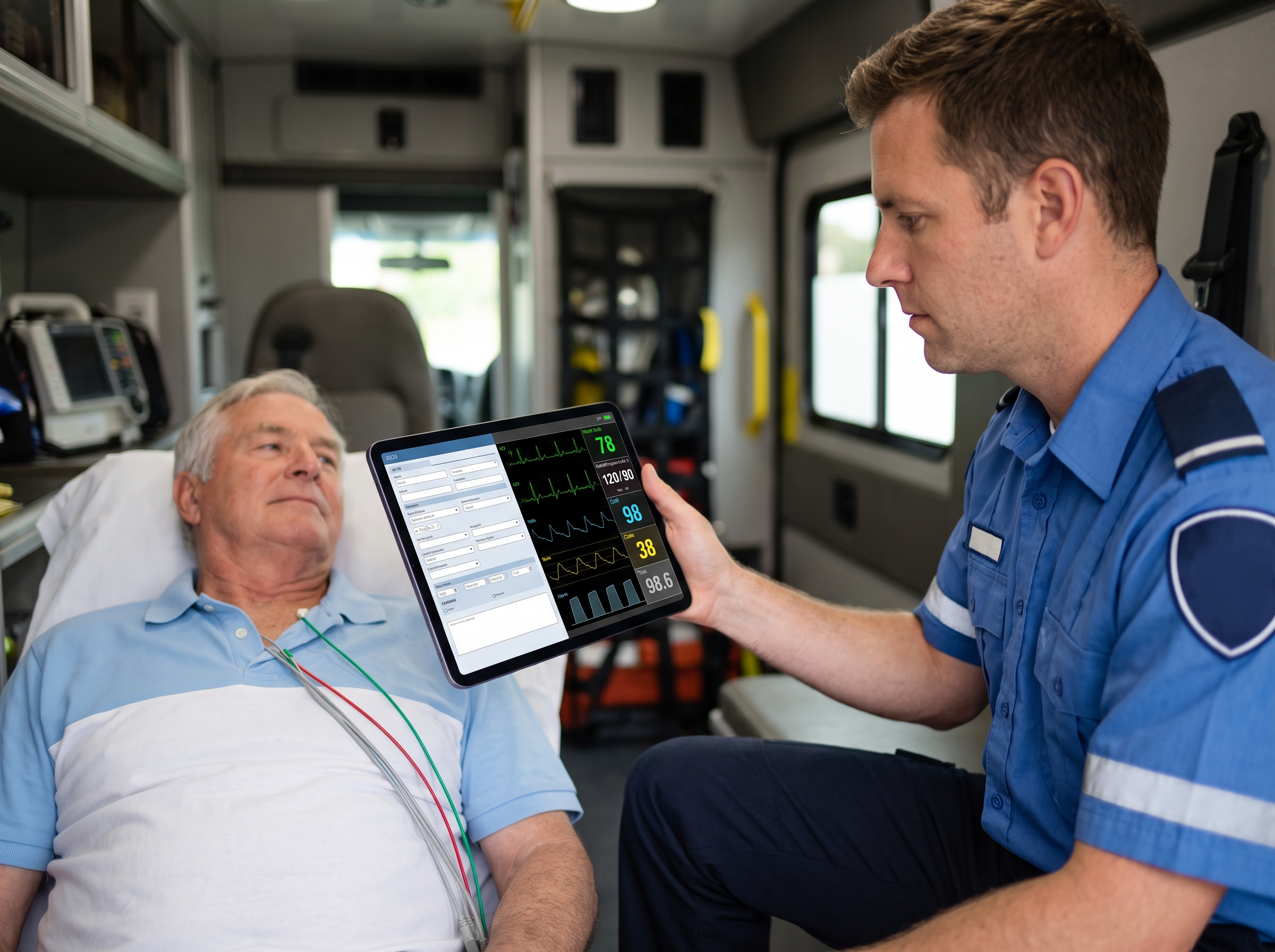
    Physician checking patient's vitals on a tablet

    OEM Model A — Raw Data Access:

    API access to ambient audio transcript, session recording, and synchronized vital signs data

    medBRIDGE hardware included in customer-facing deployment

    Implementation support for API integration

    HIPAA BAA included

    Structured as annual licensing or revenue share

    OEM Model B — NEMSIS XML Output:

    Complete NEMSIS 3.5-compliant XML generation

    Field mapping configured to your ePCR’s data schema during implementation

    API delivery of completed XML post-call

    medBRIDGE hardware included in customer-facing deployment

    Implementation support for API integration

    HIPAA BAA included

    Structured as annual licensing or revenue share

    Schedule a Partnership Discussion

    Privacy Overview

    This website uses cookies so that we can provide you with the best user experience possible. Cookie information is stored in your browser and performs functions such as recognising you when you return to our website and helping our team to understand which sections of the website you find most interesting and useful.