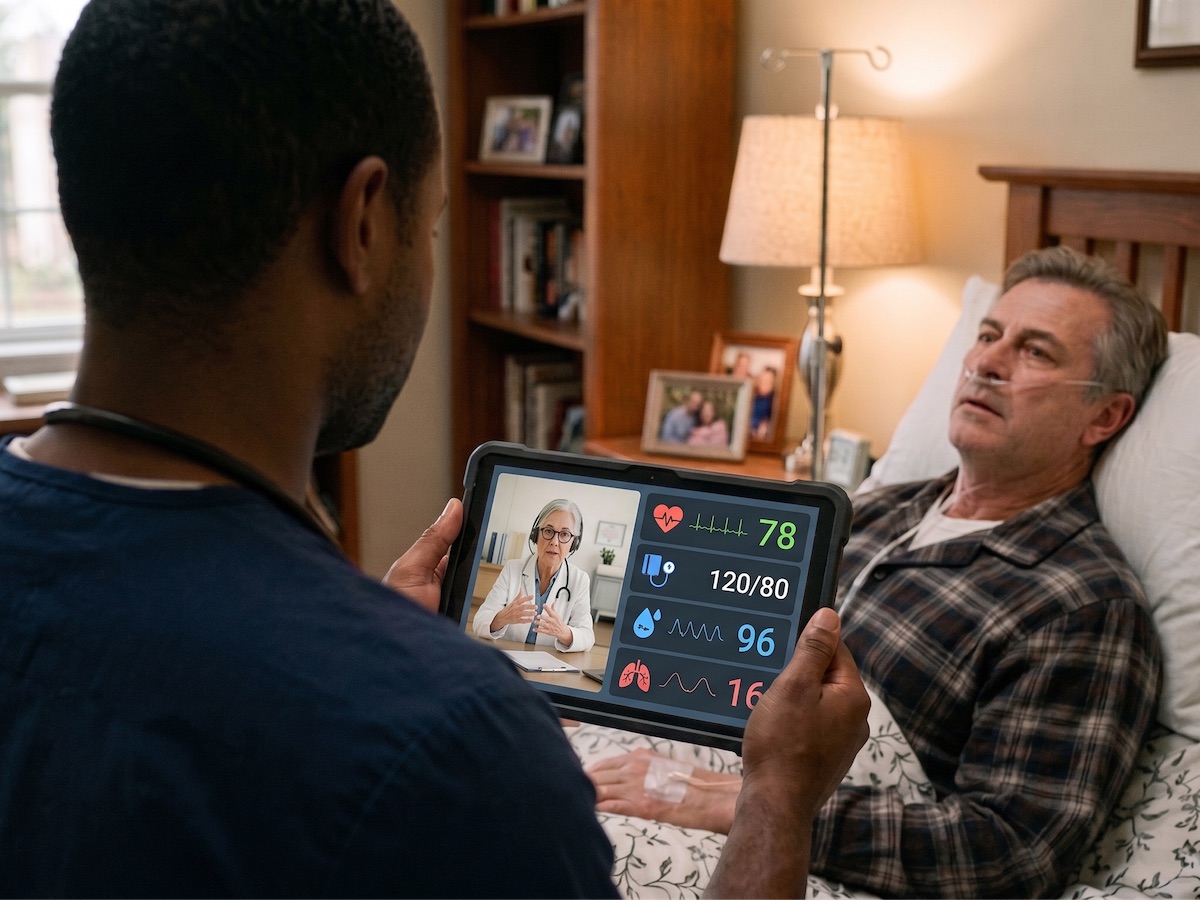
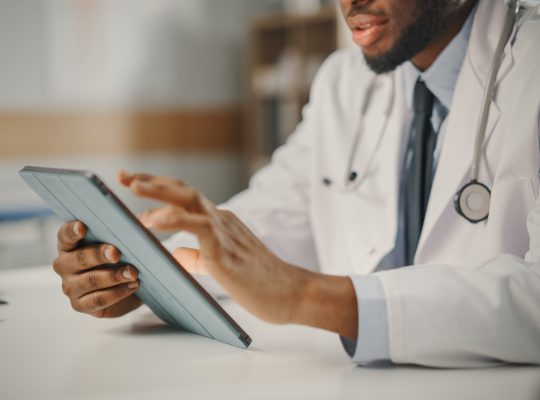
The Physician is in.

Live clinical oversight. Documented encounters that close the loop between the field and the care team.

medCLOUD brings the physician into every community paramedicine visit — in real time, before a patient deteriorates, before a preventable 911 call is made.

Physicians assist acute or care patients

Community Paramedicine is real.

The infrastructure to deliver it has been missing.

Community paramedicine programs exist because the data is undeniable: a small percentage of patients drive a disproportionate share of 911 calls, ED visits, and hospital readmissions. These patients don’t need an ambulance — they need consistent, skilled clinical attention in their homes, connected to a care team that knows them.

The paramedics doing this work are among the most capable clinicians in the field. The problem is not their training. The problem is that they are alone.

  • MIH without medCLOUD:

  • What these visits have in common:

  • The documentation problem
    is real:

A paramedic arrives at a CHF patient’s home three days post-discharge. The patient’s weight is up two pounds, their breath sounds are diminished, and their oxygen saturation is trending down. The paramedic calls medical control. A physician who has never met this patient, cannot see them, and is managing three other things listens to a verbal report and makes a decision blind.

A frequent flier with a complex psychiatric history is in crisis. The paramedic has no access to the patient’s medication list, no real-time clinical backup, and no documented authorization to treat and release. They transport. The patient is back in the ED. The program’s outcomes data takes the hit.

A post-surgical patient in a rural county is developing early signs of wound infection. The nearest physician is 40 minutes away. The nearest wound care specialist is three hours away. The paramedic documents what they see and schedules a follow-up for next week. By next week, the patient is septic.
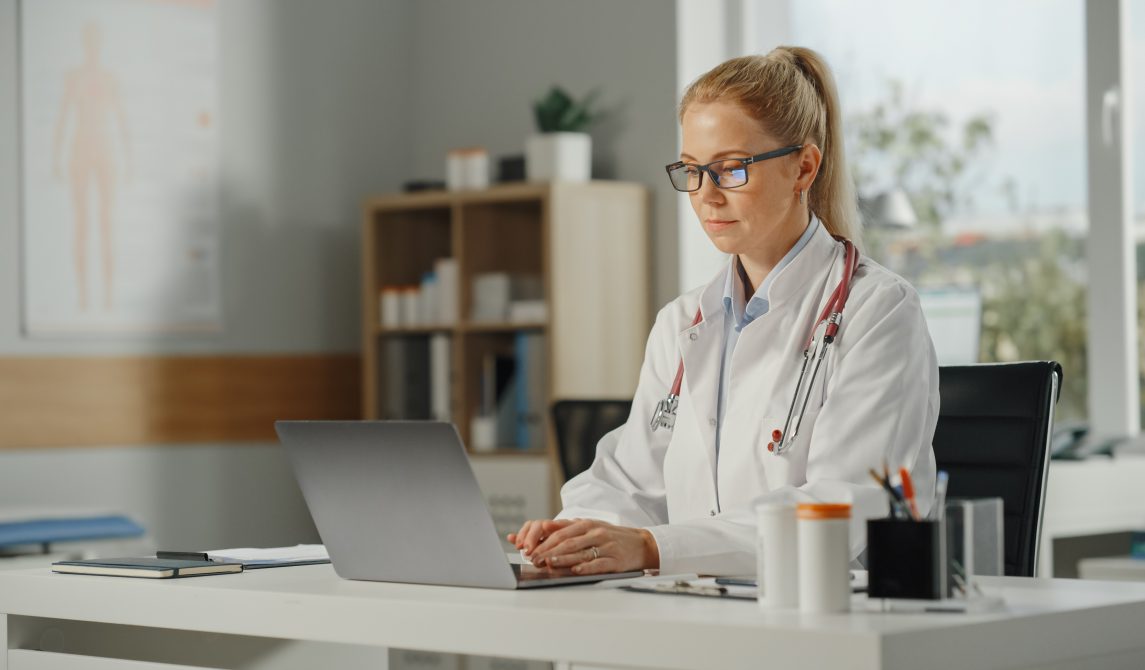
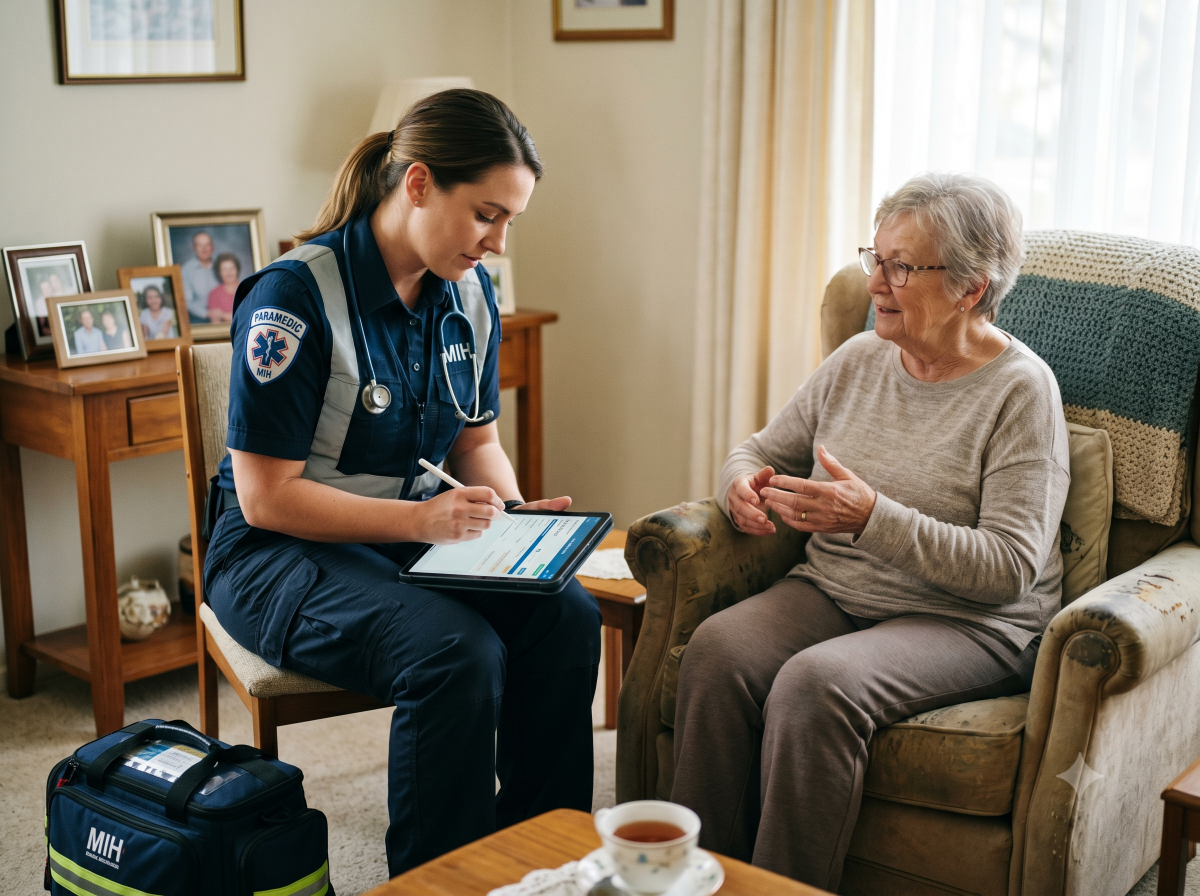
The clinical capability was in the room. The physician was not.

medCLOUD puts the physician in the room.

MIH programs live or die by their data. Medicaid reimbursement, grant renewals, and program sustainability all depend on documentation that captures the clinical complexity of what paramedics are actually doing on these visits.

Most documentation is retrospective, incomplete, and undersells the clinical value of the work. Programs that should be scaling are staying small because the paperwork doesn’t reflect the outcomes.

  • MIH without medCLOUD:

  • A paramedic arrives at a CHF patient’s home three days post-discharge. The patient’s weight is up two pounds, their breath sounds are diminished, and their oxygen saturation is trending down. The paramedic calls medical control. A physician who has never met this patient, cannot see them, and is managing three other things listens to a verbal report and makes a decision blind.

    A frequent flier with a complex psychiatric history is in crisis. The paramedic has no access to the patient’s medication list, no real-time clinical backup, and no documented authorization to treat and release. They transport. The patient is back in the ED. The program’s outcomes data takes the hit.

    A post-surgical patient in a rural county is developing early signs of wound infection. The nearest physician is 40 minutes away. The nearest wound care specialist is three hours away. The paramedic documents what they see and schedules a follow-up for next week. By next week, the patient is septic.
  • What these visits have in common:

  • The clinical capability was in the room. The physician was not.

    medCLOUD puts the physician in the room.

  • The documentation problem
    is real:

  • MIH programs live or die by their data. Medicaid reimbursement, grant renewals, and program sustainability all depend on documentation that captures the clinical complexity of what paramedics are actually doing on these visits.

    Most documentation is retrospective, incomplete, and undersells the clinical value of the work. Programs that should be scaling are staying small because the paperwork doesn’t reflect the outcomes.

  • 01 For MIH Program Directors:

  • 02 For Medical Directors in MIH Programs:

  • 03 For the Paramedic on the Visit:

  • 04 For State MIH Programs and Grant Funders:

When Every MIH Visit Has a Physician Present

The book Scaling the Hospital frames it precisely: the future of acute care is not a building. It is a highly coordinated, data-driven platform capable of delivering safe, humane care exactly where patients need it most. medCLOUD is that platform for the paramedics already doing this work.

Every complex visit has documented physician oversight — not a phone call, a real-time clinical encounter with a session recording

Treat-in-place decisions are authorized, documented, and defensible

Program outcomes data reflects the actual clinical complexity of what your paramedics are doing

Medicaid reimbursement justification is built into the documentation from the moment the visit begins


When Every MIH Visit Has a Physician Present

The book Scaling the Hospital frames it precisely: the future of acute care is not a building. It is a highly coordinated, data-driven platform capable of delivering safe, humane care exactly where patients need it most. medCLOUD is that platform for the paramedics already doing this work.

Real-time visibility into every active visit — join any session, review live vitals, direct assessment and treatment remotely

Protocol compliance visible as it happens

A searchable, auditable record of every supervisory interaction

The ability to serve as clinical backstop for an entire program without being physically present at any visit


When Every MIH Visit Has a Physician Present

The book Scaling the Hospital frames it precisely: the future of acute care is not a building. It is a highly coordinated, data-driven platform capable of delivering safe, humane care exactly where patients need it most. medCLOUD is that platform for the paramedics already doing this work.

A physician in their corner on every complex call — not after, not by phone, but watching the same vitals and directing in real time

Documentation that writes itself from the encounter rather than from memory at the end of a shift

Clinical backup that makes treat-in-place not just possible but defensible


When Every MIH Visit Has a Physician Present

The book Scaling the Hospital frames it precisely: the future of acute care is not a building. It is a highly coordinated, data-driven platform capable of delivering safe, humane care exactly where patients need it most. medCLOUD is that platform for the paramedics already doing this work.

Aggregate outcome data across all visits — ED avoidance rates, treat-in-place rates, readmission reduction, clinical complexity metrics — all generated from documented encounters, not self-reported estimates

A platform that meets the documentation standards required for Medicaid MIH reimbursement codes

Rural Health Transformation grant eligibility — CP-MIH telehealth infrastructure is explicitly named as a qualifying use of RHT funds


  • 01 For MIH Program Directors:

  • The book Scaling the Hospital frames it precisely: the future of acute care is not a building. It is a highly coordinated, data-driven platform capable of delivering safe, humane care exactly where patients need it most. medCLOUD is that platform for the paramedics already doing this work.

    Every complex visit has documented physician oversight — not a phone call, a real-time clinical encounter with a session recording

    Treat-in-place decisions are authorized, documented, and defensible

    Program outcomes data reflects the actual clinical complexity of what your paramedics are doing

    Medicaid reimbursement justification is built into the documentation from the moment the visit begins


  • 02 For Medical Directors in MIH Programs:

  • The book Scaling the Hospital frames it precisely: the future of acute care is not a building. It is a highly coordinated, data-driven platform capable of delivering safe, humane care exactly where patients need it most. medCLOUD is that platform for the paramedics already doing this work.

    Real-time visibility into every active visit — join any session, review live vitals, direct assessment and treatment remotely

    Protocol compliance visible as it happens

    A searchable, auditable record of every supervisory interaction

    The ability to serve as clinical backstop for an entire program without being physically present at any visit


  • 03 For the Paramedic on the Visit:

  • The book Scaling the Hospital frames it precisely: the future of acute care is not a building. It is a highly coordinated, data-driven platform capable of delivering safe, humane care exactly where patients need it most. medCLOUD is that platform for the paramedics already doing this work.

    A physician in their corner on every complex call — not after, not by phone, but watching the same vitals and directing in real time

    Documentation that writes itself from the encounter rather than from memory at the end of a shift

    Clinical backup that makes treat-in-place not just possible but defensible


  • 04 For State MIH Programs and Grant Funders:

  • The book Scaling the Hospital frames it precisely: the future of acute care is not a building. It is a highly coordinated, data-driven platform capable of delivering safe, humane care exactly where patients need it most. medCLOUD is that platform for the paramedics already doing this work.

    Aggregate outcome data across all visits — ED avoidance rates, treat-in-place rates, readmission reduction, clinical complexity metrics — all generated from documented encounters, not self-reported estimates

    A platform that meets the documentation standards required for Medicaid MIH reimbursement codes

    Rural Health Transformation grant eligibility — CP-MIH telehealth infrastructure is explicitly named as a qualifying use of RHT funds


    From the field:

    “The moment our medical director could actually see the patient rather than just hear about them, the quality of our treat-in-place decisions changed entirely. We stopped transporting patients who didn’t need it and started catching the ones who did — earlier.”

    MIH Program Director


    “Our documentation used to tell maybe 60 percent of the story of what happened on a visit. Now it tells all of it, because the session captures everything in real time. Our QA team reviews recordings, not run reports written from memory.”

    MIH Medical Director

    HOW MEDCLOUD WORKS

    Simple for the Paramedic. Complete for the Care Team.

    medCLOUD is a Progressive Web App — no installation required, no app store, no device dependency. Your paramedic opens a browser on the tablet or smartphone they already carry, initiates a session, and the physician is present within seconds. Works anywhere there is cellular or WiFi connectivity.

    • 1. Connect

    • 2. Stream

    • 3. Document

    Three Steps:

    Attach the medBRIDGE relay device to any compatible patient monitor. medBRIDGE streams live vitals — ECG, blood pressure, SpO2, temperature, capnography — directly to the medCLOUD platform. No new monitors required. medBRIDGE works with the equipment your program already has.

    Three Steps:

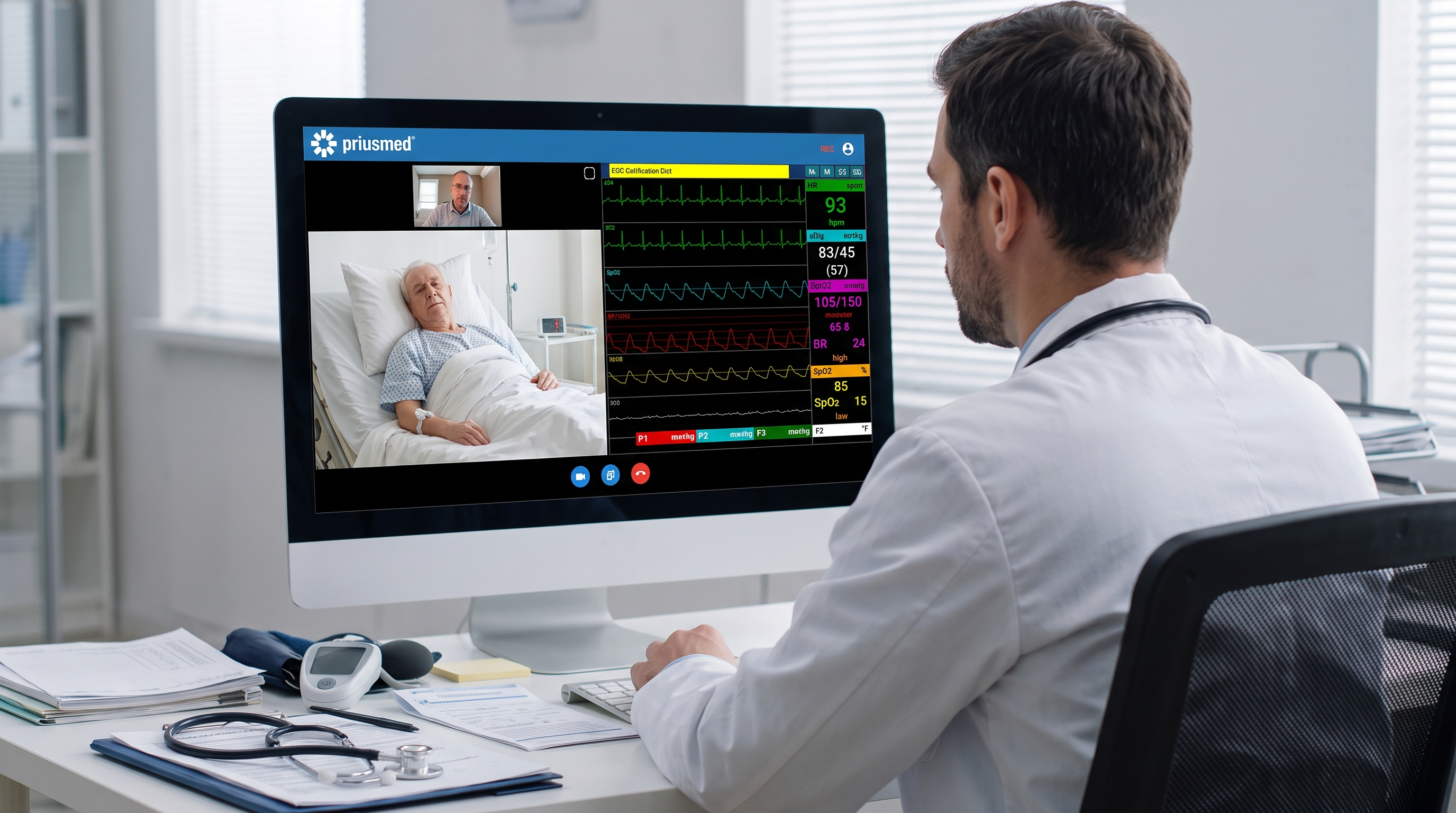
    Live vitals, ambient audio, and video transmit securely to the supervising physician in real time. The physician joins from any browser-enabled device — hospital, home, or office. The patient’s care team can also be invited to observe. Every participant sees the same clinical picture simultaneously.

    Three Steps:

    The session records ambient audio throughout the visit. Combined with the synchronized vitals record, medCLOUD generates a complete, structured clinical encounter record. That record integrates directly with your care management platform and EHR — no double documentation, no retrospective reconstruction.

    • 1. Connect

    • Three Steps:

      Attach the medBRIDGE relay device to any compatible patient monitor. medBRIDGE streams live vitals — ECG, blood pressure, SpO2, temperature, capnography — directly to the medCLOUD platform. No new monitors required. medBRIDGE works with the equipment your program already has.

    • 2. Stream

    • Three Steps:

      Live vitals, ambient audio, and video transmit securely to the supervising physician in real time. The physician joins from any browser-enabled device — hospital, home, or office. The patient’s care team can also be invited to observe. Every participant sees the same clinical picture simultaneously.

    • 3. Document

    • Three Steps:

      The session records ambient audio throughout the visit. Combined with the synchronized vitals record, medCLOUD generates a complete, structured clinical encounter record. That record integrates directly with your care management platform and EHR — no double documentation, no retrospective reconstruction.

    Works with your existing systems -
    medCLOUD is designed to connect to the platforms your MIH program already runs:

    Care Management Platform: HealthCall API integration — session data flows directly into HealthCall’s CP-MIH documentation workflow

    EHR: Epic and other major EHR systems via HL7 and FHIR — patient records, encounter documentation, and outcome data flow bidirectionally

    Patient Monitors: Compatible with major monitoring platforms via medBRIDGE — device agnostic, no proprietary hardware required

    medCLOUD adds physician presence and clinical documentation to the workflow your program already uses. It does not replace it.
    • "Are home visits being recorded
      without patient consent?"

    • "What about cybersecurity and
      HIPAA compliance for home visit data?"

    • "We can't afford new
      capital equipment for our paramedics."

    • "Our paramedics are already overwhelmed with documentation. This feels like more work."

    The Questions MIH Programs Ask Most — and Why the Answers Work in Your Favor

    Every medCLOUD session is initiated as a documented clinical encounter and conducted under the same consent framework that governs any telehealth visit. Patients consent to the telehealth session as part of their MIH program enrollment. Session recordings are stored as protected health information under HIPAA, accessible only to authorized clinical personnel. Recording is disclosed as part of standard program intake.

    The advantage: your program now has a complete, unambiguous record of exactly what happened on every visit. That record protects your paramedic, your medical director, and your program in any audit, reimbursement dispute, or legal matter. Programs that document well get funded. Programs that document poorly get cut.

    The Questions MIH Programs Ask Most — and Why the Answers Work in Your Favor

    medCLOUD is HIPAA-compliant with AES-256 encryption in transit and at rest. Session recordings and patient data are stored on secure infrastructure with role-based access controls. The platform was designed for healthcare data from the ground up. PHI never leaves the secure environment.

    The advantage: medCLOUD gives your program a documented, auditable chain of custody for every clinical encounter — something handwritten visit notes and verbal medical control calls have never provided. For Medicaid billing and grant reporting, that audit trail is not a liability. It is your program’s strongest asset.

    The Questions MIH Programs Ask Most — and Why the Answers Work in Your Favor

    medCLOUD is a subscription, not a capital purchase. medBRIDGE is included in your subscription at no additional cost. The patient monitors medCLOUD connects to are the ones your program already uses — medBRIDGE bridges your existing equipment to the platform. If your program needs to add monitoring devices, those are purchased directly from the manufacturer at standard pricing. PriusMED is not a distributor and does not mark up equipment.

    The advantage: the only new cost is the subscription. Everything your paramedics already carry works with medCLOUD. The platform was designed specifically to remove the capital equipment barrier for programs operating on grant funding and tight margins.

    The Questions MIH Programs Ask Most — and Why the Answers Work in Your Favor

    medCLOUD is specifically designed to reduce documentation burden, not add to it. Because the session captures ambient audio and synchronized vitals throughout the visit, the clinical encounter record is generated from what actually happened — not from what the paramedic can remember to type afterward. For programs using HealthCall, session data flows directly into the CP-MIH documentation workflow. There is no parallel system to maintain.

    The advantage: your paramedics spend more time on clinical care and less time on paperwork. Documentation quality improves because the record comes from the encounter, not from memory reconstructed under fatigue.

    • "Are home visits being recorded
      without patient consent?"

    • The Questions MIH Programs Ask Most — and Why the Answers Work in Your Favor

      Every medCLOUD session is initiated as a documented clinical encounter and conducted under the same consent framework that governs any telehealth visit. Patients consent to the telehealth session as part of their MIH program enrollment. Session recordings are stored as protected health information under HIPAA, accessible only to authorized clinical personnel. Recording is disclosed as part of standard program intake.

      The advantage: your program now has a complete, unambiguous record of exactly what happened on every visit. That record protects your paramedic, your medical director, and your program in any audit, reimbursement dispute, or legal matter. Programs that document well get funded. Programs that document poorly get cut.

    • "What about cybersecurity and
      HIPAA compliance for home visit data?"

    • The Questions MIH Programs Ask Most — and Why the Answers Work in Your Favor

      medCLOUD is HIPAA-compliant with AES-256 encryption in transit and at rest. Session recordings and patient data are stored on secure infrastructure with role-based access controls. The platform was designed for healthcare data from the ground up. PHI never leaves the secure environment.

      The advantage: medCLOUD gives your program a documented, auditable chain of custody for every clinical encounter — something handwritten visit notes and verbal medical control calls have never provided. For Medicaid billing and grant reporting, that audit trail is not a liability. It is your program’s strongest asset.

    • "We can't afford new
      capital equipment for our paramedics."

    • The Questions MIH Programs Ask Most — and Why the Answers Work in Your Favor

      medCLOUD is a subscription, not a capital purchase. medBRIDGE is included in your subscription at no additional cost. The patient monitors medCLOUD connects to are the ones your program already uses — medBRIDGE bridges your existing equipment to the platform. If your program needs to add monitoring devices, those are purchased directly from the manufacturer at standard pricing. PriusMED is not a distributor and does not mark up equipment.

      The advantage: the only new cost is the subscription. Everything your paramedics already carry works with medCLOUD. The platform was designed specifically to remove the capital equipment barrier for programs operating on grant funding and tight margins.

    • "Our paramedics are already overwhelmed with documentation. This feels like more work."

    • The Questions MIH Programs Ask Most — and Why the Answers Work in Your Favor

      medCLOUD is specifically designed to reduce documentation burden, not add to it. Because the session captures ambient audio and synchronized vitals throughout the visit, the clinical encounter record is generated from what actually happened — not from what the paramedic can remember to type afterward. For programs using HealthCall, session data flows directly into the CP-MIH documentation workflow. There is no parallel system to maintain.

      The advantage: your paramedics spend more time on clinical care and less time on paperwork. Documentation quality improves because the record comes from the encounter, not from memory reconstructed under fatigue.

    ORDERING INFORMATION

    Straightforward Pricing Built for MIH Programs..

    medCLOUD is available as an annual subscription with one, two, and three-year term options. Programs operating on grant funding cycles can align subscription terms to their grant periods. Multi-year commitments receive preferred pricing.

    Subscription terms:

    1-year subscription
    2-year subscription (preferred pricing)
    3-year subscription (best value)

    Grant-funded programs: we can work with your program administrator to align subscription terms and invoicing to your grant period and reporting requirements.

    Physician checking patient's vitals on a tablet

    What's included in every subscription:

    medCLOUD platform access for your program — unlimited sessions, unlimited users

    medBRIDGE relay device — included, no additional cost

    HealthCall API integration — session data flows directly into your CP-MIH documentation workflow

    EHR integration via HL7 and FHIR — Epic and other major platforms

    Session recording and secure HIPAA-compliant storage

    Onboarding and training support

    Ongoing platform updates and support

    What's not included:

    Patient monitoring devices are purchased directly from the manufacturer at standard pricing.

    PriusMED is not a distributor for monitoring equipment.

    medBRIDGE is compatible with major monitoring platforms — your clinical team can advise on compatible devices if needed.

    Start Your medCLOUD Pilot

    See medCLOUD working in your program before you commit. Our MIH pilot evaluation gives your program full platform access to test medCLOUD on real visits — with your paramedics, your monitors, and your medical director — before making a subscription commitment.

    Pilot participants receive:
    Full medCLOUD platform access for the evaluation period
    medBRIDGE device for the duration of the pilot
    HealthCall integration setup and support
    Onboarding and training for your paramedics and medical director
    A dedicated clinical success contact throughout the evaluation
    Aggregate outcome data from your pilot visits for your program reporting
    Privacy Overview

    This website uses cookies so that we can provide you with the best user experience possible. Cookie information is stored in your browser and performs functions such as recognising you when you return to our website and helping our team to understand which sections of the website you find most interesting and useful.