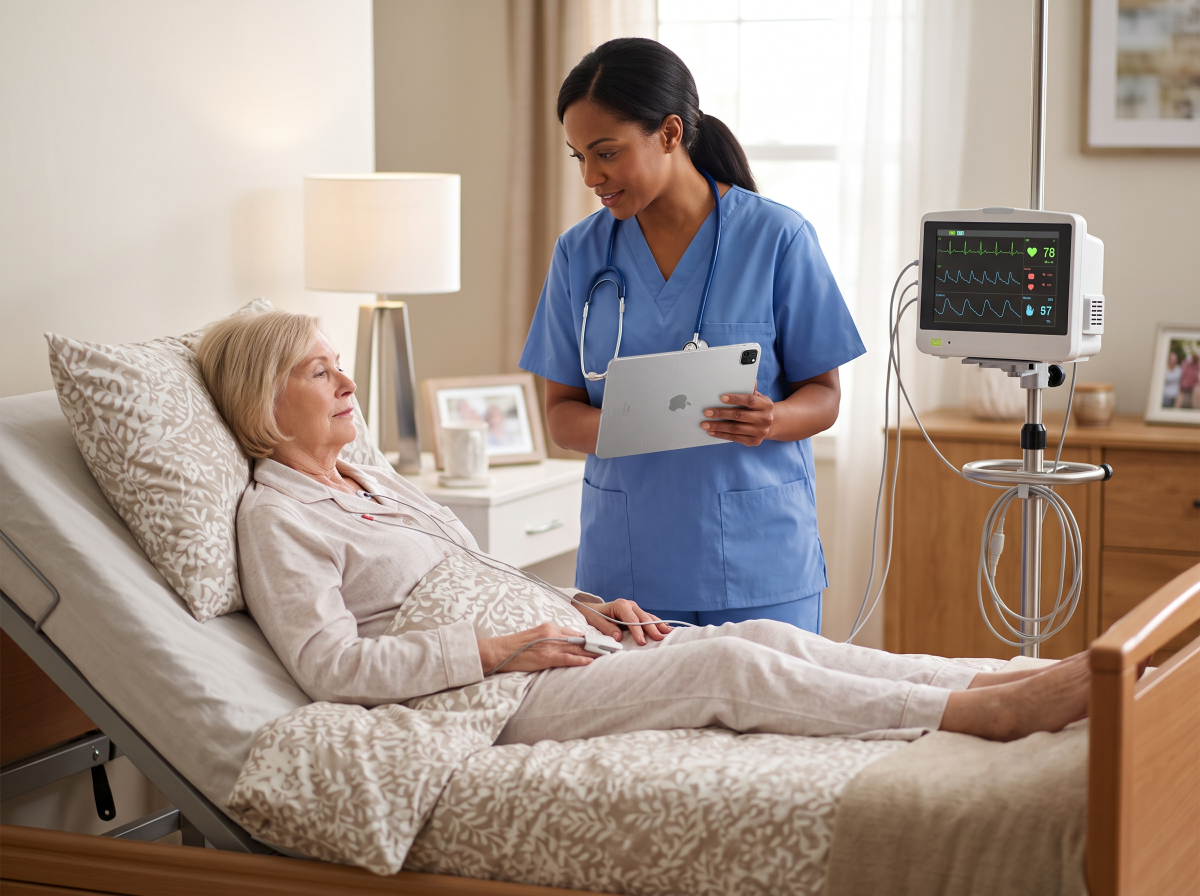

The hospital is no longer a place. It's a standard of care.

Hospital at Home is the response — and medCLOUD is the infrastructure that makes it clinically safe.
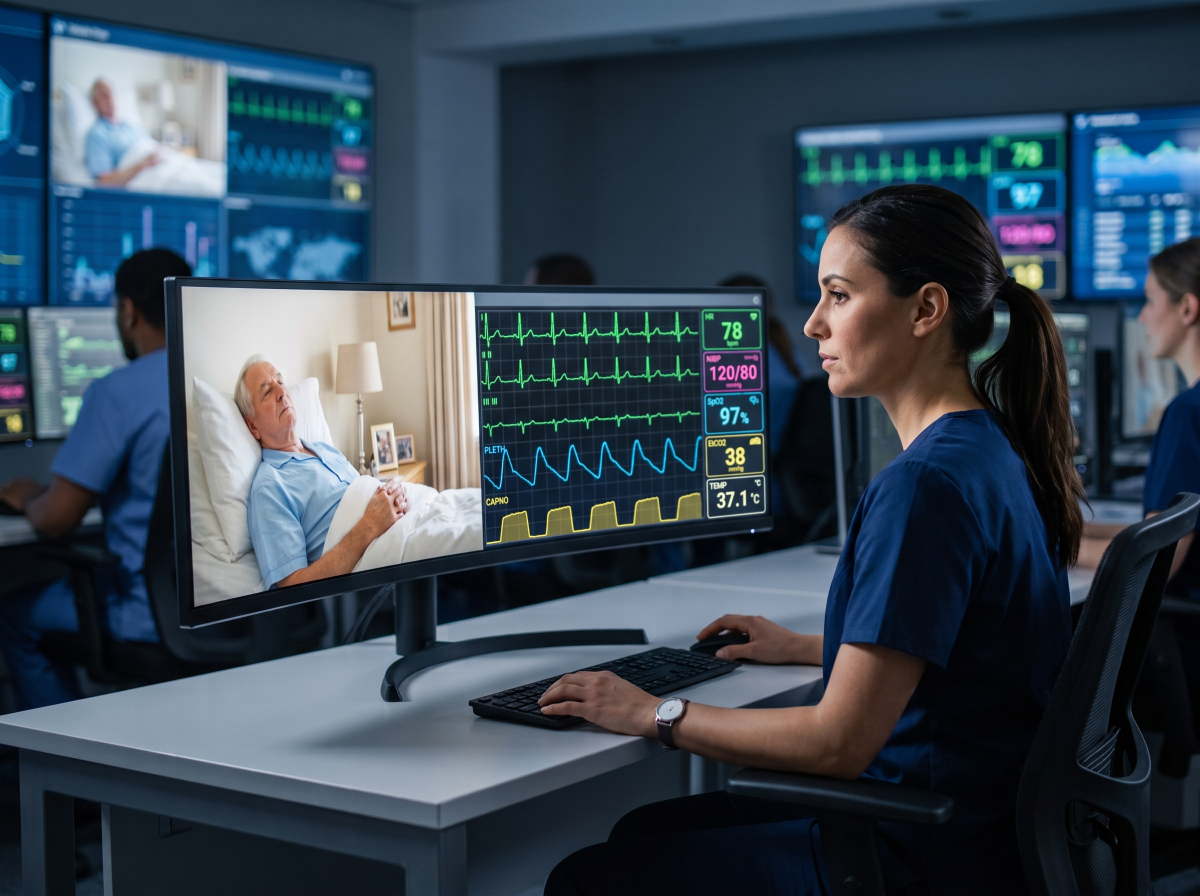
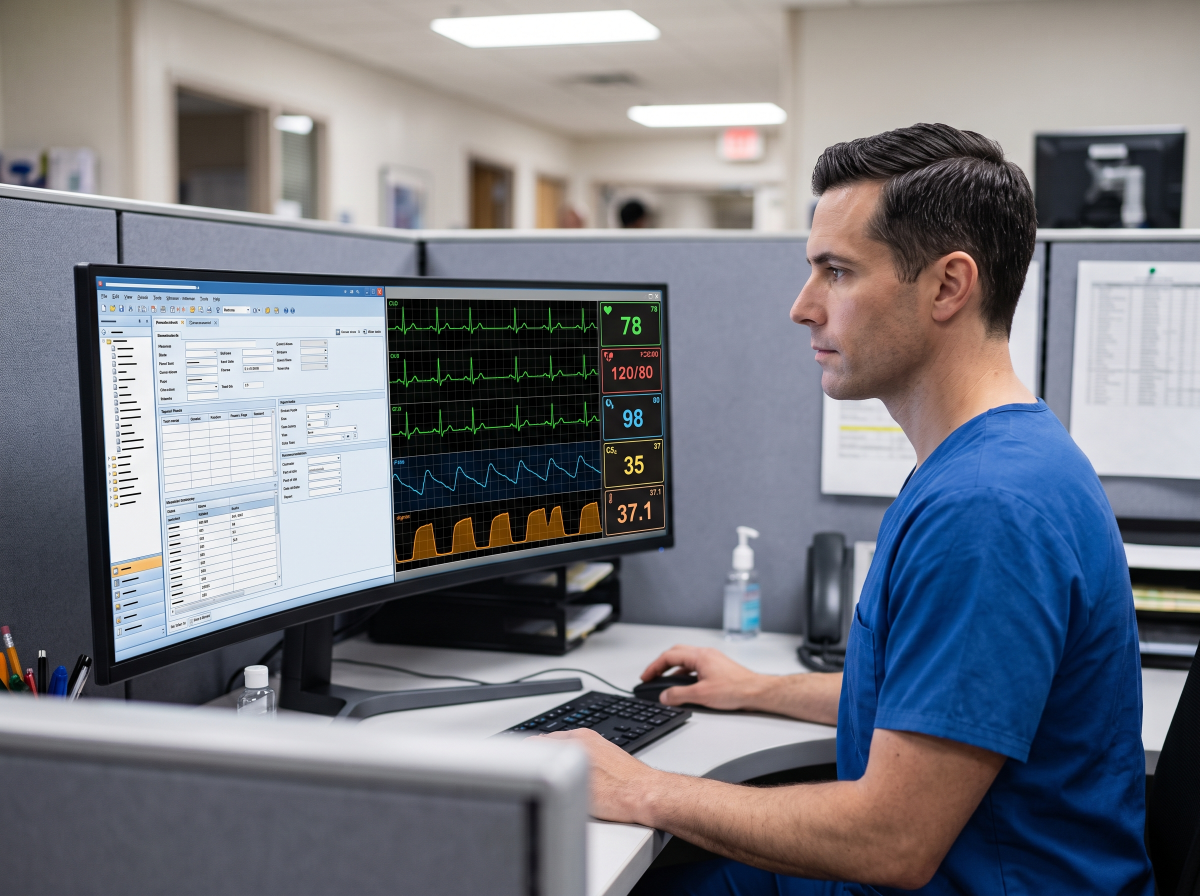
Physician and surgeon discussing patient vitals

The hospital is no longer a place.

It's a standard of care.

For a rapidly growing population of older adults managing complex chronic conditions, the physical hospital has become a source of serious harm. Hospital-acquired infections, forced immobilization, and sensory-induced delirium frequently leave patients sicker upon discharge than when they arrived.

Hospital at Home is the response — and medCLOUD is the infrastructure that makes it clinically safe.

  • CHF (Congestive Heart Failure) Management:

  • Post-Surgical Recovery:

  • Acute Infectious Disease Management:

  • Oncology Support:

  • Chronic Disease Exacerbation
    (COPD, Diabetes, Hypertension):

The problem: CHF patients are among the highest-cost, highest-readmission populations in American healthcare. Fluid accumulation happens gradually — by the time a patient calls 911, they are already in crisis. The hospital treats the crisis, discharges the patient, and waits for the next one.

How medCLOUD changes this: A CHF patient enrolled in a HaH program wears continuous monitoring. Their cardiologist sees their biometrics in real time — weight trends, SpO2, respiratory rate. When early deterioration signals appear, the physician intervenes remotely before the patient decompensates. No transport. No readmission. No crisis.

The problem: Patients discharged 24-48 hours after surgery are sent home with a phone number and a pamphlet. Wound complications, infection, and medication issues go undetected until they require emergency intervention.

How medCLOUD changes this: The surgical team maintains daily remote visibility — vital signs, wound assessment via video, medication adherence — with the ability to intervene immediately if a concern arises. The patient recovers at home. The surgeon is still, effectively, in the room.

The problem: Pneumonia, cellulitis, and other infections that require IV antibiotics have historically required inpatient admission — not because the patient needed a hospital bed, but because the monitoring and medication delivery infrastructure didn’t exist at home.

How medCLOUD changes this: Mobile clinicians deliver IV medication, while medCLOUD streams continuous biometrics to the supervising physician. If the patient’s condition changes, the physician sees it before it escalates. Acute-level care, delivered where the patient heals fastest — at home.

The problem: Cancer patients undergoing chemotherapy are immunocompromised and particularly vulnerable to hospital-acquired infection. Every unnecessary inpatient day is a clinical risk.

How medCLOUD changes this: Chemotherapy infusion, symptom monitoring, and supportive care can be delivered in the home environment with real-time physician oversight. The patient avoids unnecessary exposure. The oncology team maintains full clinical visibility throughout.

The problem: Patients with complex chronic conditions cycle through the ED and inpatient units in predictable patterns — not because their conditions require inpatient acuity, but because there is no clinical bridge between the outpatient world and the hospital.

How medCLOUD changes this: Continuous monitoring with physician-supervised remote management catches exacerbations early. The patient stays home. The health system avoids an avoidable admission.

  • CHF (Congestive Heart Failure) Management:

  • The problem: CHF patients are among the highest-cost, highest-readmission populations in American healthcare. Fluid accumulation happens gradually — by the time a patient calls 911, they are already in crisis. The hospital treats the crisis, discharges the patient, and waits for the next one.

    How medCLOUD changes this: A CHF patient enrolled in a HaH program wears continuous monitoring. Their cardiologist sees their biometrics in real time — weight trends, SpO2, respiratory rate. When early deterioration signals appear, the physician intervenes remotely before the patient decompensates. No transport. No readmission. No crisis.

  • Post-Surgical Recovery:

  • The problem: Patients discharged 24-48 hours after surgery are sent home with a phone number and a pamphlet. Wound complications, infection, and medication issues go undetected until they require emergency intervention.

    How medCLOUD changes this: The surgical team maintains daily remote visibility — vital signs, wound assessment via video, medication adherence — with the ability to intervene immediately if a concern arises. The patient recovers at home. The surgeon is still, effectively, in the room.

  • Acute Infectious Disease Management:

  • The problem: Pneumonia, cellulitis, and other infections that require IV antibiotics have historically required inpatient admission — not because the patient needed a hospital bed, but because the monitoring and medication delivery infrastructure didn’t exist at home.

    How medCLOUD changes this: Mobile clinicians deliver IV medication, while medCLOUD streams continuous biometrics to the supervising physician. If the patient’s condition changes, the physician sees it before it escalates. Acute-level care, delivered where the patient heals fastest — at home.

  • Oncology Support:

  • The problem: Cancer patients undergoing chemotherapy are immunocompromised and particularly vulnerable to hospital-acquired infection. Every unnecessary inpatient day is a clinical risk.

    How medCLOUD changes this: Chemotherapy infusion, symptom monitoring, and supportive care can be delivered in the home environment with real-time physician oversight. The patient avoids unnecessary exposure. The oncology team maintains full clinical visibility throughout.

  • Chronic Disease Exacerbation
    (COPD, Diabetes, Hypertension):

  • The problem: Patients with complex chronic conditions cycle through the ED and inpatient units in predictable patterns — not because their conditions require inpatient acuity, but because there is no clinical bridge between the outpatient world and the hospital.

    How medCLOUD changes this: Continuous monitoring with physician-supervised remote management catches exacerbations early. The patient stays home. The health system avoids an avoidable admission.

  • 01 For Hospital Executives and CMOs:

  • 02 For Physicians and Clinical Teams:

  • 03 For Patients:

Hospital at Home: Redefining Acute Care

Introducing elastic capacity — the ability to flex acute care beyond physical walls — is the ultimate strategic asset for an overwhelmed health network. medCLOUD is that infrastructure.

Freed bed capacity — every patient safely managed at home is a bed available for a patient who genuinely needs inpatient acuity

Reduced readmission penalties — continuous monitoring catches deterioration before it triggers a readmission event

Lower per-episode cost — Hospital at Home costs 30-50% less per episode than equivalent inpatient care in documented programs

Competitive differentiation — health systems with HaH programs are positioned for value-based contracting in ways that fee-for-service competitors are not


Hospital at Home: Redefining Acute Care

The physician’s role expands in the Hospital at Home model. With medCLOUD, the attending physician maintains the same clinical visibility they would have at the bedside. Live vitals. Video assessment. Documented oversight. The care doesn’t change. The location does.

Real-time biometric streaming eliminates the clinical blind spot between in-person visits

Session recording creates a defensible record of every clinical decision

Multi-participant clinical collaboration allows attending, specialist, and bedside clinician to assess simultaneously

The physician is no longer constrained by geography


Hospital at Home: Redefining Acute Care

Patients recover faster at home. Sleep is better. Nutrition is better. Stress is lower. Infection risk is eliminated. And for the growing population of older adults for whom a hospital stay itself causes harm — delirium, deconditioning, falls — home is not just preferred. It is clinically superior.

“Empowered patients actively prefer it.” — Scaling the Hospital

No exposure to hospital-acquired infection

Recovery in a familiar, comfortable environment

Family members engaged as informed participants, not waiting room occupants

The dignity of receiving care at home


  • 01 For Hospital Executives and CMOs:

  • Introducing elastic capacity — the ability to flex acute care beyond physical walls — is the ultimate strategic asset for an overwhelmed health network. medCLOUD is that infrastructure.

    Freed bed capacity — every patient safely managed at home is a bed available for a patient who genuinely needs inpatient acuity

    Reduced readmission penalties — continuous monitoring catches deterioration before it triggers a readmission event

    Lower per-episode cost — Hospital at Home costs 30-50% less per episode than equivalent inpatient care in documented programs

    Competitive differentiation — health systems with HaH programs are positioned for value-based contracting in ways that fee-for-service competitors are not


  • 02 For Physicians and Clinical Teams:

  • The physician’s role expands in the Hospital at Home model. With medCLOUD, the attending physician maintains the same clinical visibility they would have at the bedside. Live vitals. Video assessment. Documented oversight. The care doesn’t change. The location does.

    Real-time biometric streaming eliminates the clinical blind spot between in-person visits

    Session recording creates a defensible record of every clinical decision

    Multi-participant clinical collaboration allows attending, specialist, and bedside clinician to assess simultaneously

    The physician is no longer constrained by geography


  • 03 For Patients:

  • Patients recover faster at home. Sleep is better. Nutrition is better. Stress is lower. Infection risk is eliminated. And for the growing population of older adults for whom a hospital stay itself causes harm — delirium, deconditioning, falls — home is not just preferred. It is clinically superior.

    “Empowered patients actively prefer it.” — Scaling the Hospital

    No exposure to hospital-acquired infection

    Recovery in a familiar, comfortable environment

    Family members engaged as informed participants, not waiting room occupants

    The dignity of receiving care at home


    Acute-level care.

    Any device. Anywhere.

    medCLOUD is a device-agnostic, cloud-based platform that streams synchronized audio, video, and live patient vital signs simultaneously from the home to the clinical team.

    It works as a Progressive Web Application — no proprietary hardware required, no app store download necessary, accessible from any modern browser on any device.

    • What it streams, simultaneously:

    • Connectivity:

    • Session recording:

    How medCLOUD works

    12-lead ECG waveforms · Blood pressure (NIBP) · Oxygen saturation (SpO2) · Capnography (EtCO2) · Temperature · Plethysmography · Invasive blood pressure (IBP) · High-resolution video · Bidirectional audio

    medBRIDGE connects any compatible patient monitoring device to the medCLOUD platform. Included with every subscription. Works with the monitors your clinical team already uses — no equipment replacement required.

    How medCLOUD works

    Designed for standard cellular, office fiber, or mobile satellite.

    The platform operates in degraded connectivity environments — because clinical emergencies don’t wait for good WiFi.

    How medCLOUD works

    Every encounter is recorded, timestamped, and stored with full chain of custody. Accessible for clinical review, quality assurance, and legal documentation.

    • What it streams, simultaneously:

    • How medCLOUD works

      12-lead ECG waveforms · Blood pressure (NIBP) · Oxygen saturation (SpO2) · Capnography (EtCO2) · Temperature · Plethysmography · Invasive blood pressure (IBP) · High-resolution video · Bidirectional audio

      medBRIDGE connects any compatible patient monitoring device to the medCLOUD platform. Included with every subscription. Works with the monitors your clinical team already uses — no equipment replacement required.

    • Connectivity:

    • How medCLOUD works

      Designed for standard cellular, office fiber, or mobile satellite.

      The platform operates in degraded connectivity environments — because clinical emergencies don’t wait for good WiFi.

    • Session recording:

    • How medCLOUD works

      Every encounter is recorded, timestamped, and stored with full chain of custody. Accessible for clinical review, quality assurance, and legal documentation.

    medCLOUD interoperates with your healthcare system.

    Epic — native integration pathway via HL7 FHIR R4

    Other major EHRs — HL7 v2 and FHIR-compatible data exchange

    Bidirectional data flow — clinical data captured during the medCLOUD session can be returned to the EHR of record, eliminating duplicate documentation

    Vendor-agnostic flexibility — medCLOUD does not require your health system to change its EHR. It works alongside your existing system of record.

    “End-to-end interoperability is not optional — it is the mandate. Standards-based bidirectional data flows ensure the EHR remains the single source of truth while maximizing workflow efficiency, data accuracy, and patient safety.” — Scaling the Hospital
    • "Is the session recorded?
      Who has access to the recording?"

    • "How do you handle cybersecurity and patient data privacy?"

    • "What monitoring equipment does this require?
      Do we need to buy new devices?"

    • "What is the capital expenditure?
      Is this another major technology investment?"

    • "What happens if connectivity drops during a session?"

    • "How does this integrate with our Epic system?"

    FREQUENTLY ASKED QUESTIONS

    Yes — every medCLOUD session is recorded in its entirety. Access is controlled by your health system and limited to authorized clinical personnel. Recordings are stored in a HIPAA-compliant environment with full audit logging. Far from a liability, the recording is your strongest clinical and legal protection — a complete, timestamped record of every decision, every vital sign, every clinical interaction. When a family member or plaintiff asks “what happened,” you have a documented answer.

    FREQUENTLY ASKED QUESTIONS

    medCLOUD is built on a HIPAA-compliant, encrypted architecture with end-to-end security across transmission and storage. Patient data never transits unsecured channels. The platform uses the same security standards required of enterprise healthcare systems. For health systems with additional compliance requirements — HITRUST, SOC 2, state-specific regulations — our implementation team works through your security review process directly. Cybersecurity is not a barrier to adoption. It is a requirement we are built to meet.

    FREQUENTLY ASKED QUESTIONS

    medCLOUD is device-agnostic. The medBRIDGE relay device — included with every subscription — connects any compatible patient monitoring device your clinical team already uses to the medCLOUD platform. Most health systems find that their existing monitoring equipment is compatible. Where new monitoring devices are needed, they are purchased directly from the manufacturer. There is no proprietary hardware lock-in.

    FREQUENTLY ASKED QUESTIONS

    medCLOUD is a subscription model — there is no large upfront capital expenditure. The subscription includes medBRIDGE hardware and full platform access. Monitoring devices are purchased from manufacturers at standard market pricing. For health systems evaluating the capital case: Hospital at Home programs consistently demonstrate 30-50% lower per-episode cost than equivalent inpatient care. medCLOUD does not add cost to your HaH program — it enables it to be clinically viable. The question is not whether you can afford to implement medCLOUD. It is what an avoidable readmission costs you without it.

    FREQUENTLY ASKED QUESTIONS

    medCLOUD is designed to operate across multiple connectivity pathways — 5G, cellular, fiber, and satellite. The platform maintains session continuity across connectivity transitions and is designed for degraded connectivity environments. Session recording continues locally if connectivity drops and syncs when connection is restored. This is not a consumer telehealth platform — it was built for clinical environments where connectivity cannot be assumed.

    FREQUENTLY ASKED QUESTIONS

    medCLOUD integrates with Epic via HL7 FHIR R4, the current interoperability standard. Clinical data captured during the medCLOUD session — vitals, timestamps, clinical notes — flows back into the Epic record, eliminating duplicate documentation burden for the clinical team. Our implementation team has experience with Epic integration and works directly with your health system’s IT team. The goal is that medCLOUD feels like a native extension of your existing workflow, not a parallel system.

    • "Is the session recorded?
      Who has access to the recording?"

    • FREQUENTLY ASKED QUESTIONS

      Yes — every medCLOUD session is recorded in its entirety. Access is controlled by your health system and limited to authorized clinical personnel. Recordings are stored in a HIPAA-compliant environment with full audit logging. Far from a liability, the recording is your strongest clinical and legal protection — a complete, timestamped record of every decision, every vital sign, every clinical interaction. When a family member or plaintiff asks “what happened,” you have a documented answer.

    • "How do you handle cybersecurity and patient data privacy?"

    • FREQUENTLY ASKED QUESTIONS

      medCLOUD is built on a HIPAA-compliant, encrypted architecture with end-to-end security across transmission and storage. Patient data never transits unsecured channels. The platform uses the same security standards required of enterprise healthcare systems. For health systems with additional compliance requirements — HITRUST, SOC 2, state-specific regulations — our implementation team works through your security review process directly. Cybersecurity is not a barrier to adoption. It is a requirement we are built to meet.

    • "What monitoring equipment does this require?
      Do we need to buy new devices?"

    • FREQUENTLY ASKED QUESTIONS

      medCLOUD is device-agnostic. The medBRIDGE relay device — included with every subscription — connects any compatible patient monitoring device your clinical team already uses to the medCLOUD platform. Most health systems find that their existing monitoring equipment is compatible. Where new monitoring devices are needed, they are purchased directly from the manufacturer. There is no proprietary hardware lock-in.

    • "What is the capital expenditure?
      Is this another major technology investment?"

    • FREQUENTLY ASKED QUESTIONS

      medCLOUD is a subscription model — there is no large upfront capital expenditure. The subscription includes medBRIDGE hardware and full platform access. Monitoring devices are purchased from manufacturers at standard market pricing. For health systems evaluating the capital case: Hospital at Home programs consistently demonstrate 30-50% lower per-episode cost than equivalent inpatient care. medCLOUD does not add cost to your HaH program — it enables it to be clinically viable. The question is not whether you can afford to implement medCLOUD. It is what an avoidable readmission costs you without it.

    • "What happens if connectivity drops during a session?"

    • FREQUENTLY ASKED QUESTIONS

      medCLOUD is designed to operate across multiple connectivity pathways — 5G, cellular, fiber, and satellite. The platform maintains session continuity across connectivity transitions and is designed for degraded connectivity environments. Session recording continues locally if connectivity drops and syncs when connection is restored. This is not a consumer telehealth platform — it was built for clinical environments where connectivity cannot be assumed.

    • "How does this integrate with our Epic system?"

    • FREQUENTLY ASKED QUESTIONS

      medCLOUD integrates with Epic via HL7 FHIR R4, the current interoperability standard. Clinical data captured during the medCLOUD session — vitals, timestamps, clinical notes — flows back into the Epic record, eliminating duplicate documentation burden for the clinical team. Our implementation team has experience with Epic integration and works directly with your health system’s IT team. The goal is that medCLOUD feels like a native extension of your existing workflow, not a parallel system.

    ORDERING INFORMATION

    Flexible subscription options designed for how health systems actually plan.

    medCLOUD is available on 1-year, 2-year, and 3-year subscription terms.

    Pricing is based on program scope, number of sites, and subscription term. Contact us for a customized quote based on your patient population, program scope, and integration requirements.

    Physician checking patient's vitals on a tablet

    Every subscription includes:

    ✓ Full medCLOUD platform access — unlimited sessions, unlimited users within your licensed program

    ✓ medBRIDGE hardware — pre-configured relay device connecting your existing patient monitors to the platform

    ✓ Implementation support — onboarding, integration setup, and clinical training

    ✓ Ongoing technical support

    ✓ Software updates throughout the subscription term

    What's not included:

    Patient monitoring devices are purchased directly from the device manufacturer.

    PriusMED partners with leading monitoring device vendors and can facilitate introductions, but devices are not sold through PriusMED.

    This keeps your procurement flexible and vendor relationships direct.

    Start Your medCLOUD Pilot

    See medCLOUD working before you commit. Our HaH pilot evaluation gives your program full platform access to test medCLOUD with your paramedics, your monitors, and your medical director — before making a subscription commitment.

    Pilot participants receive:
    Full medCLOUD platform access for the evaluation period
    medBRIDGE device for the duration of the pilot
    Onboarding and training for your paramedics and medical director
    A dedicated clinical success contact throughout the evaluation
    Aggregate outcome data from your pilot visits for your program reporting
    Privacy Overview

    This website uses cookies so that we can provide you with the best user experience possible. Cookie information is stored in your browser and performs functions such as recognising you when you return to our website and helping our team to understand which sections of the website you find most interesting and useful.